Tree surveys for London planning applications
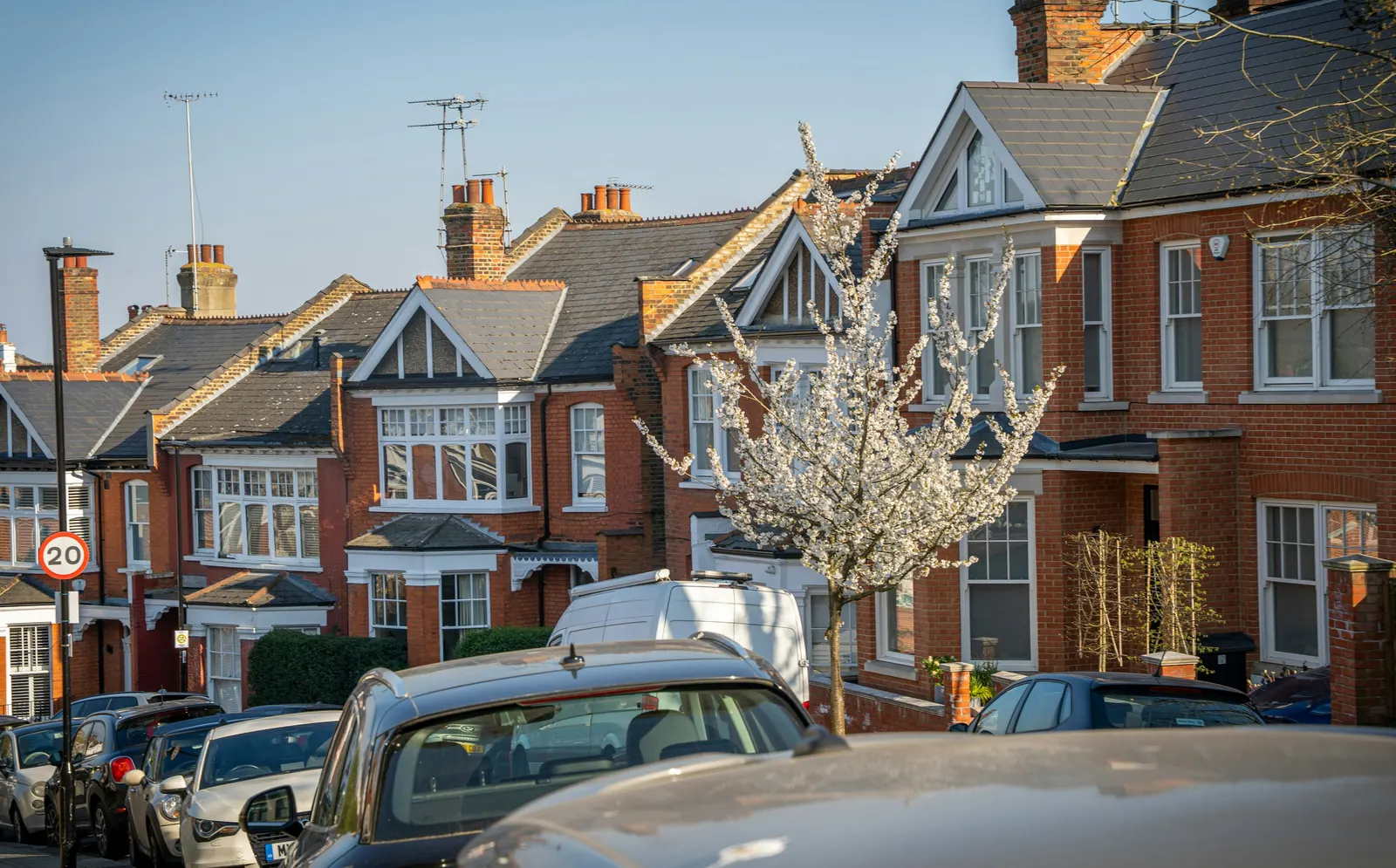
A tree in the garden, or in a neighbour's garden close to the boundary, can hold up an extension or a new house. Councils want to know which trees are there, how healthy they are and how the building will protect them. An arboriculturist we coordinate surveys the trees and prepares the report for your application, for a fixed £445.
Fixed fee from £445 · all prices
Prefer to talk it through?
Which trees are protected
Two kinds of protection apply in London. A tree preservation order protects individual trees or groups the council has chosen. And trees in a conservation area that are not covered by an order are protected by section 211 of the Town and Country Planning Act 1990, which requires people to notify the council six weeks before doing certain work to them. Government guidance says the work may go ahead before the end of the 6 week period if the council gives consent.
The penalties are real. Government guidance says a person convicted in the magistrates' court of cutting down or damaging a protected tree is liable to a fine of up to £20,000, and in serious cases, in the Crown Court, to an unlimited fine. A duty to replace a tree removed in contravention of an order also applies. We check the protection before anything else, because it decides what your design can do.
Tree Surveys for Planning
from £445
Every price is the full fixed fee you pay. No VAT is charged. Council application fees are paid to the council separately.
What you get
- A survey of every tree on the site and close enough to affect it, including those next door
- Each tree rated by quality and life expectancy
- A plan showing tree positions, crowns and root protection areas against your scheme
- A statement of which trees are kept, which would go and what protects the ones that stay
- Check for tree preservation orders and conservation area protection
- A report ready for the planning application, coordinated with the site plan
- Check protection
Whether a tree preservation order or a conservation area covers the trees before any work is planned.
- Survey on site
The arboriculturist records species, size, condition and life expectancy of each tree.
- Plot the constraints
Root protection areas drawn against your proposed extension or building.
- Adjust the design
Foundations, footprint or levels changed where a tree needs more room.
- Report and submit
A tree report and protection plan sent with the application.
What a council wants to see
For most applications that affect trees, the council expects a survey and report in line with British Standard BS 5837, Trees in relation to design, demolition and construction. The version in use is the one published by the British Standards Institution on 30 April 2012, which the BSI lists as current and under review. It sets out how trees are surveyed, rated and protected during a build.
The most important output is the root protection area: a circle around each retained tree in which the ground must not be dug, compacted or built over without special care. Drawn on your site plan, it shows at a glance whether an extension footprint, a trench or a new path is in the wrong place, and what a different foundation could do.
It also says that new development should make provision for the long-term maintenance of existing and newly-planted trees that form part of it.
Neighbours' trees count too
A tree on the other side of the fence can stop a rear extension as firmly as one in your own garden, because its roots cross the boundary and its crown overhangs. The survey includes trees outside the site that are close enough to be affected, recorded from where they can be seen if access is not given.
That is why the survey comes before the drawings are finished. A beech eight metres away will change where the foundations go and how deep, which in turn changes the structural engineer's work. Our rear extension drawings service coordinates the two so the design reflects the tree from the start.
Policy that sits behind the survey
National planning policy in the August 2026 framework asks that development proposals conserve and enhance existing natural features of visual, historic or nature conservation value, such as established trees and hedgerows, where possible. It also says that new development should make provision for the long-term maintenance of existing and newly-planted trees that form part of it.
For the rarest trees, the policy is stricter. Development that would entail the loss or deterioration of irreplaceable habitats, such as ancient woodland and ancient or veteran trees, should be refused unless there are wholly exceptional reasons and a suitable compensation strategy exists. A survey tells you early if you have one of these on the plot.

If a tree has to go
Sometimes a tree is in the wrong place and is low quality or in poor health, and the honest answer is to remove it and plant a better one. The report then sets out why, how the loss is made up, and what the council would ask for as replacement. A protected tree cannot be taken out without consent, so the application for the scheme and for the tree work are sensibly dealt with together.
Where a tree is worth keeping, the report proposes protective fencing, ground protection and, where foundations come close, a design that bridges the roots. Designing around a tree is usually less disruptive than arguing with the council about losing it.
Who does the survey, and the fee
The survey and the BS 5837 report are carried out by an arboriculturist we coordinate. We do not claim to do tree surveying ourselves. We give the arboriculturist the survey and the site plan, merge the tree constraints into the drawings and make sure the report and the application agree.
The fixed fee is £445, the total you pay, with no VAT charged. It covers a typical house plot. Larger sites, many trees or an impact assessment for a major scheme are quoted first. Send us the address and tell us where the trees stand.
Sources
Every figure on this page, where it comes from and a link to the original.
| Figure | Source | Link |
|---|---|---|
| 6 week period | Planning Practice Guidance, Tree Preservation Orders and trees in conservation areas, para 116: section 211 requires notice to the council (source wording: "6 weeks before carrying out certain work on such trees"; "The work may go ahead before the end of the 6 week period if the local planning authority gives consent") | www.gov.uk |
| £20,000 | Planning Practice Guidance, Tree Preservation Orders and trees in conservation areas: a person convicted of these offences is liable (source wording: "if convicted in the magistrates’ court, to a fine of up to £20,000") | www.gov.uk |
| unlimited fine | Planning Practice Guidance, Tree Preservation Orders and trees in conservation areas: (source wording: "if convicted, is liable to an unlimited fine" in the Crown Court) | www.gov.uk |
| 30 April 2012 | BSI Knowledge, BS 5837:2012 Trees in relation to design, demolition and construction. Recommendations: (source wording: "Published: 30 Apr 2012"; "Current, Under Review") | knowledge.bsigroup.com |
| long-term maintenance | NPPF (August 2026) policy N3(1)(c): development proposals should (source wording: "Make provision for the long-term maintenance of both existing and newly-planted trees") | www.gov.uk |
| wholly exceptional reasons | NPPF (August 2026) policy N6(2): development which would entail the loss or deterioration of irreplaceable habitats (such as ancient woodland and ancient or veteran trees) should be refused (source wording: "unless there are wholly exceptional reasons") | www.gov.uk |