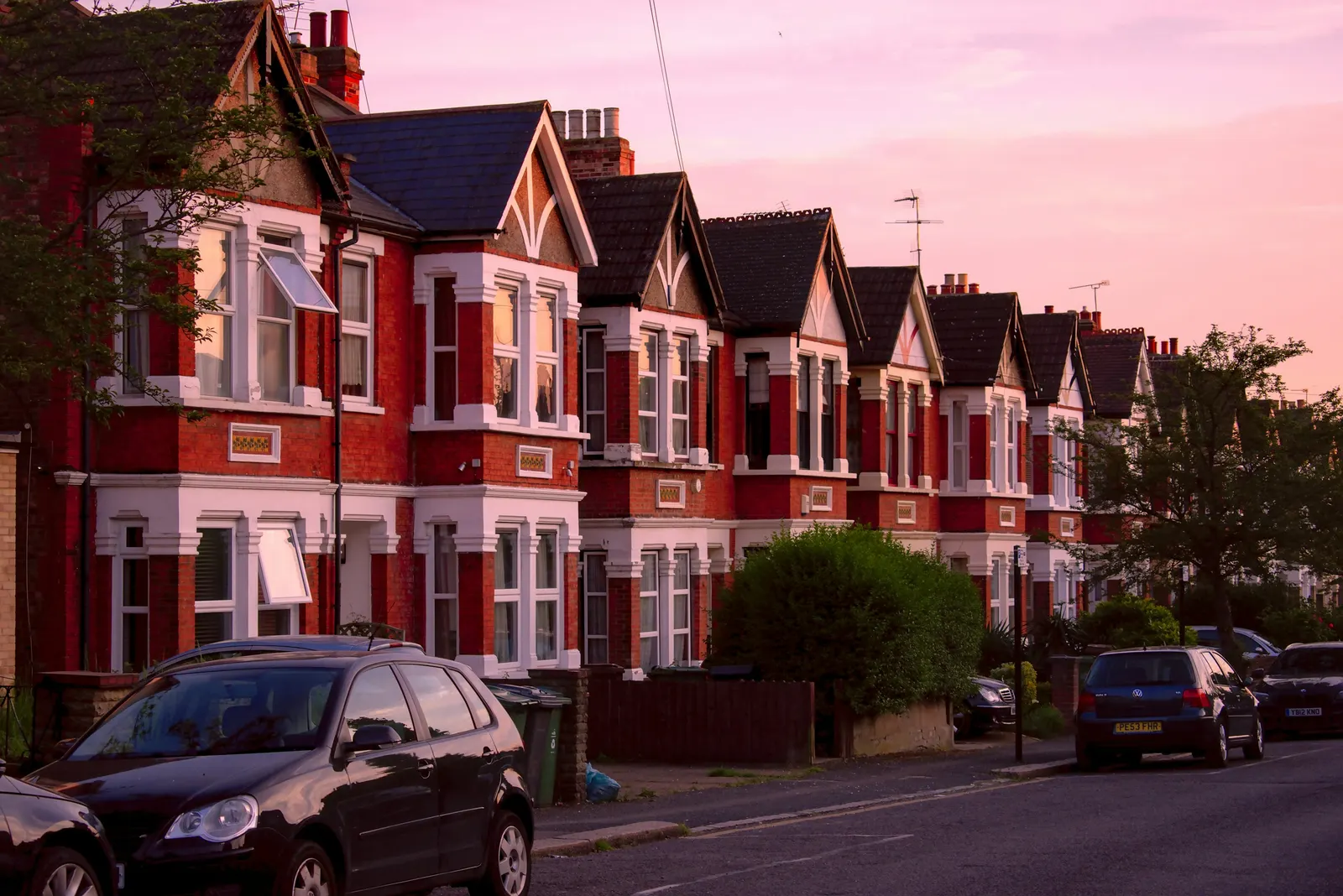
Householder planning appeals for a refused London house or extension
A refusal is not always the end, but the clock starts the day it is dated. We read the decision notice and case officer's report, tell you honestly whether an appeal, a revised application or giving up is the better move, and if you appeal we write the grounds and submit them to the Planning Inspectorate, for a fixed £449.
Fixed fee from £449 · all prices
Prefer to talk it through?
The deadline comes first
If your application was refused, you can appeal for up to 12 weeks from the date on the decision letter. That runs from the date printed on the notice, not the day it reached you. If you also received an enforcement notice, the window is much shorter: 28 days if the notice came before the refusal, and for a notice that arrived afterwards, whichever is sooner of 28 days from receiving it or 6 months from the date of the decision letter.
Twelve weeks goes quickly. A good appeal needs the refusal read, the policies checked and the grounds written, and the Inspectorate says plainly that you should not appeal until you are ready to proceed to a decision. Send us the decision letter as soon as you have it and we will count the days with you.
Householder Planning Appeals
from £449
Every price is the full fixed fee you pay. No VAT is charged. Council application fees are paid to the council separately.
What you get
- A close read of the decision notice and the case officer's report
- A plain verdict: appeal, resubmit a revised scheme, or leave it
- The statement of the grounds of appeal, answering each reason for refusal
- A check that the drawings sent to the Inspector match the refused plans
- The appeal form and documents submitted to the Planning Inspectorate
- Handling of the Inspectorate's questions during the written process
- Read the refusal
We go through each reason for refusal and the officer's report, and check the deadline against the date on the decision letter.
- Choose the route
Appeal the decision, or resubmit a changed scheme. We say which one has the better odds and the shorter wait.
- Write the grounds
A focused statement answering each reason, referring to the policies and to your drawings.
- Submit the appeal
We file with the Planning Inspectorate with the refused plans, the decision notice and the statement.
- Wait for the Inspector
A householder appeal is decided by an Inspector on written representations.
Appeal, or change the scheme and apply again?
An appeal is not the only answer to a refusal, and often it is not the right one. The Inspector decides the scheme you applied for. The Planning Inspectorate's procedural guide says it is unlikely to accept new evidence outside a short list of changed circumstances, and that if an appellant believes an amended scheme would overcome the reasons for refusal, they should submit a revised planning application to the council instead.
That sets the choice. If the refusal turns on a judgement the officer got wrong, such as a claim that the extension is overbearing when the drawings show it is not, an appeal is sound. If the refusal turns on something you can fix by changing the design, a lower roof line, a shallower depth or a different material, a revised application is usually quicker and keeps the council on side. We tell you which, and we say so even when it means you do not buy the appeal.
The Inspectorate's guide says that parties are expected to meet their own appeal expenses.
How long a householder appeal takes
The Planning Inspectorate publishes how long decided appeals have taken. For householder appeals decided by written representations in September 2026, the median was 12 weeks and the mean 14 weeks, across 278 decisions. The figure runs from the date the appeal became valid to the decision, and it is a record of past cases, not a promise for yours.
Plan with that in mind. If the refused extension was meant to start next spring, a householder appeal and a build do not fit into the same gap unless you start now. The same page shows full planning appeals decided by written representations at a median of 18 weeks.
What the grounds of appeal need to do
The Inspector reads two things: the council's reasons for refusal and your answer to them. A strong statement takes the reasons one at a time. It quotes the policy the council relied on, shows with measurements why the scheme complies or why the officer weighed it wrongly, and refers to the drawing and the sheet that proves it.
Weak appeals argue that the owner needs the space, or that the neighbour's extension is bigger. Need is rarely a planning reason. Comparison with other houses on the street can help, but only when the examples are close, recent and approved under the same policies. We find those examples in the council's own planning register and put them in the statement with their reference numbers.

Costs and risk
In this procedure each party pays its own way. The Inspectorate's guide says that parties are expected to meet their own appeal expenses. A costs award is possible only when a party has behaved unreasonably and that behaviour caused the other to spend money it would not otherwise have needed to spend. That cuts both ways: either side can apply, and the Inspector can award costs unprompted. An appellant who submits late documents, for example, opens themselves up to an application.
Your spending is therefore our fixed fee, £449 in total, no VAT charged, plus any survey or drawings that need redoing to answer the refusal. The Inspectorate's own process is described on GOV.UK. Our guide to the planning appeal process in London goes through the stages in more detail.
What we will and will not promise
We cannot promise that an appeal will succeed, and nobody honest can. The decision belongs to the Inspector. What we promise is a straight reading of your refusal before you spend more, a statement that answers every reason, and no missed deadline.
If your refusal followed an application we did not prepare, send the decision letter and the refused drawings. If it followed one we did, the same applies: we will tell you if the drawings contributed to the problem. Use the quote form at the top of this page, and put the date on the decision letter in the message.
Sources
Every figure on this page, where it comes from and a link to the original.
| Figure | Source | Link |
|---|---|---|
| 12 weeks | GOV.UK, Appeal against a householder planning decision: if your application was refused, you can appeal (source wording: "for up to 12 weeks from the date on the decision letter") | www.gov.uk |
| 28 days | GOV.UK, Appeal against a householder planning decision: if you received the enforcement notice before your application was refused, you have (source wording: "28 days from the date on your decision letter to appeal") | www.gov.uk |
| median was 12 weeks | Planning Inspectorate, Appeals: how long they take (update of 22 October 2026, cases decided in September 2026): householder appeals, written representations, median (weeks) | www.gov.uk |
| mean 14 weeks | Planning Inspectorate, Appeals: how long they take (update of 22 October 2026, cases decided in September 2026): householder appeals, written representations, mean (weeks) | www.gov.uk |
| 278 | Planning Inspectorate, Appeals: how long they take (update of 22 October 2026, cases decided in September 2026): householder appeals, written representations, number of decisions | www.gov.uk |
| 18 weeks | Planning Inspectorate, Appeals: how long they take (update of 22 October 2026, cases decided in September 2026): s78 planning appeals, written representations, median (weeks) | www.gov.uk |
| revised planning application | Planning Inspectorate, Planning appeals procedural guide (applications dated on or after 1 April 2026), 7.3.6: if an appellant believes an amended scheme will overcome the reasons for refusal (source wording: "they should submit a revised planning application to the LPA") | www.gov.uk |
| own appeal expenses | Planning Inspectorate, Planning appeals procedural guide (applications dated on or after 1 April 2026), 3.2.1: (source wording: "expected to meet their own appeal expenses") | www.gov.uk |
| unreasonable behaviour | Planning Inspectorate, Planning appeals procedural guide (applications dated on or after 1 April 2026), 3.2.2: costs may be awarded where (source wording: "unreasonable behaviour had directly caused another party to incur expenses") | www.gov.uk |