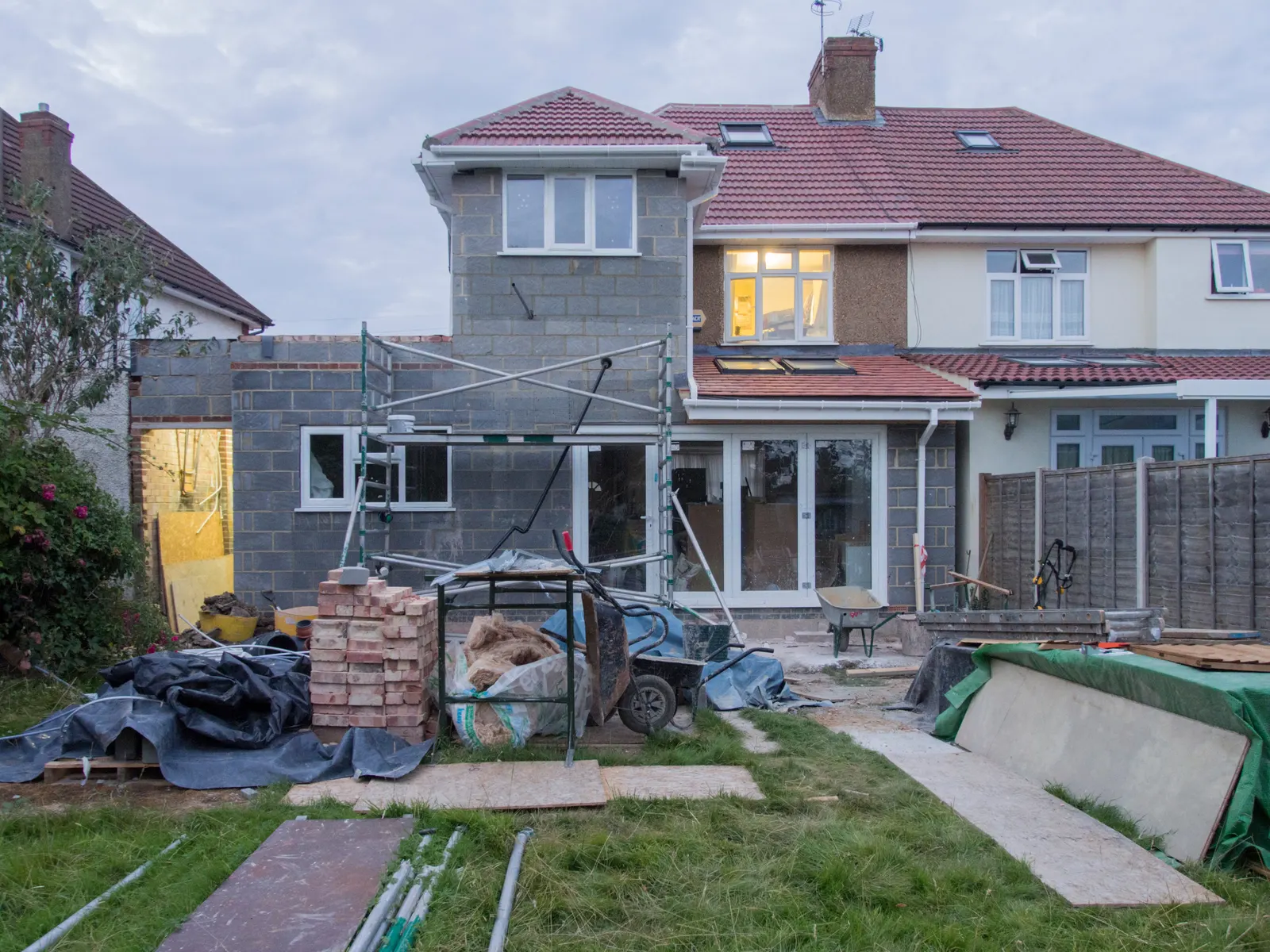
Community Infrastructure Levy forms for your London project
The Community Infrastructure Levy is paperwork before it is money: forms to assume liability, to claim an exemption, and to tell the council you are about to start. Get one wrong or late and the exemption can lapse or a surcharge can be added. We prepare the forms and tell you when each must go in, for a fixed £49.
Fixed fee from £49 · all prices
Prefer to talk it through?
Do you owe the levy at all?
Only where the council has adopted a charging schedule. Government guidance says that in such areas the levy may be payable on development that creates new internal area, where the gross internal area of new build is 100 square metres or more, and that this limit does not apply to new houses or flats, which can be charged at any size. Exclusions, exemptions and reliefs may apply.
Many modest London extensions fall under 100 square metres and are not liable. A large extension, a new house, a flat conversion with an extension or a substantial outbuilding can be. We check the floor area from your drawings against the rule before anything is filled in, and if the answer is 'no levy', we say so and you save the form fees.
CIL Form Preparation
from £49
Every price is the full fixed fee you pay. No VAT is charged. Council application fees are paid to the council separately.
What you get
- A check of whether your project is liable for the levy at all
- Whether you qualify for the exemption for a residential extension or annex
- The forms completed from your planning permission and drawings
- A dated checklist of what must be sent before work begins
- The forms completed and ready to send to the council, with notes on how to send them
- A reminder of what to do if the start date moves
- Is it liable?
Floor area of the new build, whether it is a new dwelling, and whether your council charges the levy.
- Claim the exemption
If it is your own home, the claim goes in before you start, on the published form.
- Assume liability
Someone must be named as responsible for the levy before commencement.
- Commencement notice
Sent no later than the day before work begins.
- Keep the records
A copy of what was sent and received, for the day you sell.
The exemption for your own home
Regulation 42A of the CIL Regulations 2010 exempts a person from the levy where they own a material interest in a dwelling, occupy it as their sole or main residence, and the development is a residential annex or a residential extension. An extension, for these purposes, is an enlargement to the main dwelling that does not comprise a new dwelling.
The exemption does not apply by itself. You have to claim it, and the claim has rules. Under regulation 42B, the claim must be received by the collecting authority before commencement, on a form published by the Secretary of State, with the documents the form asks for. A claim lapses if the development starts before the council has decided it. Starting on site before the paperwork is acknowledged is the usual way people lose the exemption.
Government guidance on enforcement notes that in areas that charge the levy, a retrospective permission can result in the loss of a relief or exemption that applied under an earlier permission.
The commencement notice
Where planning permission is granted for a chargeable development, regulation 67 requires a commencement notice to be submitted to the collecting authority no later than the day before the day on which the development is to be commenced. The rule has exceptions, including where an exemption for residential extensions has been granted and no levy is payable.
Counting the day before is harder than it sounds when a builder moves a start date or a demolition counts as starting the work. We give you the date by which the notice must be in, in writing, and ask you to tell us the moment the start date moves.
What it costs if you get it wrong
The regulations carry surcharges. Where a chargeable development is commenced before the council has received a valid commencement notice, the council may impose a surcharge of 20 per cent of the chargeable amount or £2,500, whichever is lower. And where nobody has assumed liability to pay the levy and the development has been commenced, the council may impose a surcharge of £50 on each person liable.
Those sums are not catastrophic on a small job, but they come on top of the levy, and an exemption lost to a late claim can cost far more. For a fixed £49, the forms and the dates are cheap insurance.

Retrospective permission and the levy
If your work has already begun without planning permission, the levy question comes up again when permission is granted afterwards. Government guidance on enforcement notes that in areas that charge the levy, a retrospective permission can result in the loss of a relief or exemption that applied under an earlier permission. That is a reason to deal with the paperwork before building, not after.
Where a permission is amended later, the CIL position can change as well. Tell us when the permission changes and we re-check it. See our retrospective planning application service if work has already started.
What we do, and the fee
We read your decision notice and drawings, work out the chargeable floor area, check the exemption, complete the forms from the information you give us and tell you when and how to send each one. We do not send them for you unless you ask, because the council wants them from the person liable, and the date you send them is on you.
The fixed fee is £49, the total you pay, with no VAT charged. It covers the check and the forms for one planning permission. The levy itself, if any, is paid to the council. Send the planning reference, the drawings and a line on who owns and lives in the house.
Sources
Every figure on this page, where it comes from and a link to the original.
| Figure | Source | Link |
|---|---|---|
| 100 square metres | Planning Practice Guidance, Community Infrastructure Levy, para 003: (source wording: "the gross internal area of new build is 100 square metres or more"); the limit does not apply to new houses or flats | www.gov.uk |
| sole or main residence | Community Infrastructure Levy Regulations 2010 reg 42A(1): exempt where P (source wording: "occupies the main dwelling as P’s sole or main residence") and the development is a residential annex or a residential extension | www.legislation.gov.uk |
| before commencement | CIL Regulations 2010 reg 42B(2): the claim must (source wording: "be received by the collecting authority before commencement of the chargeable development") | www.legislation.gov.uk |
| lapses | CIL Regulations 2010 reg 42B(3): (source wording: "a claim under this regulation will lapse where the chargeable development to which it relates is commenced before the collecting authority has notified the claimant of its decision on the claim") | www.legislation.gov.uk |
| no later than the day before | CIL Regulations 2010 reg 67(1): (source wording: "a commencement notice must be submitted to the collecting authority no later than the day before the day on which the chargeable development is to be commenced") | www.legislation.gov.uk |
| £2,500 | CIL Regulations 2010 reg 83(1): where commenced before a valid commencement notice is received (source wording: "a surcharge equal to 20 per cent of the chargeable amount payable in respect of D or £2500, whichever is the lower amount") | www.legislation.gov.uk |
| £50 | CIL Regulations 2010 reg 80: a collecting authority may impose (source wording: "a surcharge of £50 on each person liable to pay CIL") if nobody has assumed liability and the development has commenced | www.legislation.gov.uk |
| loss of a relief or exemption | Planning Practice Guidance, Enforcement and post-permission matters: in CIL charging areas the grant of a retrospective planning permission (source wording: "can result in the loss of any relief or exemption granted in relation to a previous permission") | www.gov.uk |