Pre-purchase planning reports for London homes
The extension that made the house worth viewing may have been built without permission, and the loft you plan to add may be impossible on that street. A pre-purchase planning report looks up the planning history, the constraints and the rights, and tells you what you are buying and what you could do with it, for a fixed £195.
Fixed fee from £195 · all prices
Prefer to talk it through?
What buyers actually discover afterwards
The usual problems are not exotic. A conservatory or extension was added without permission, a loft room was built to a drawing that was never approved, permitted development rights were removed by a condition on the original estate permission, or the street has an Article 4 direction that stops the work the buyer had in mind. None of those shows on the estate agent's details.
A solicitor's searches pick up some of it, but their focus is title and local land charges, not what you plan to build. A planning report asks the question from your side: given this house and what I want to do, what are the risks and the options?
Pre-Purchase Planning Reports
from £195
Every price is the full fixed fee you pay. No VAT is charged. Council application fees are paid to the council separately.
What you get
- The planning history of the address: applications, decisions and conditions
- A comparison of what is built with what was approved
- Constraints on the address: conservation area, Article 4, listing, flood zone, trees
- Whether permitted development rights look intact or have been removed
- A first view of what you could build and by which route
- A plain-English summary you can share with your solicitor before exchange
- Search the register
Every application and decision the council has recorded for the address and its neighbours.
- Compare with what is there
Extensions, lofts and outbuildings checked against the permissions on file.
- Check the constraints
Designations and directions that limit what you can do to the house.
- Test your plans
A first view of whether your idea is allowed, needs a certificate or needs permission.
- Report back
A short note of risks, questions for the seller and what to tell your solicitor.
The register, and what it can and cannot tell you
Every council must keep a register of applications for planning permission in its area. Under article 40 of the Development Management Procedure Order, the register must hold a copy of each application, with its plans and drawings, and the decision. We search it for the property and for the neighbours, because a refusal two doors down for the same idea tells you how the officer reads the policy.
What the register cannot do is prove that nothing was built without permission. Work done without consent leaves no application, and older records may be incomplete. That is why we compare the house as it stands with the plans on file, and flag the gaps for you to raise with the seller.

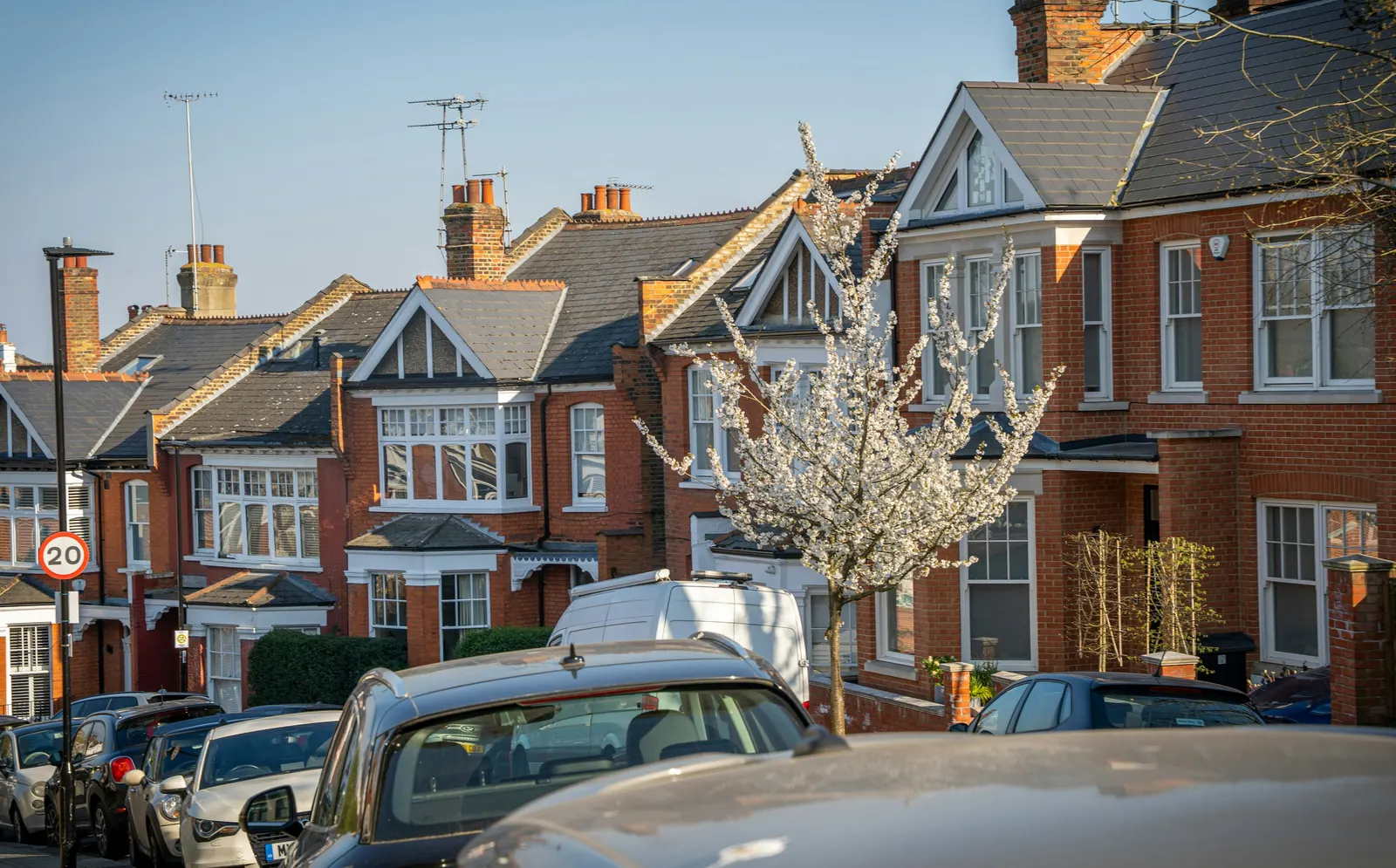
Planning guidance says permitted development rights can be removed by the council, either by a condition on a planning permission or by an article 4 direction.
Time limits that protect, and ones that expire
Two clocks matter to a buyer. The first is enforcement. Government guidance says that development generally becomes immune from enforcement action after 10 years from substantial completion for operational development finished on or after 25 April 2024, or 4 years for work finished before that date. Work that is old enough is usually safe from the council, though a lender or a later buyer may still want proof.
The second is permission. Planning permission generally lasts three years from its grant, unless it says otherwise, and the development must be begun within that time under section 91 of the Town and Country Planning Act 1990. A house advertised with 'planning permission granted' may be about to lose it, and we check the date and whether work has begun.
Rights that may have been taken away
Permitted development is what lets many owners extend without a planning application, and it is not guaranteed. Planning guidance says permitted development rights can be removed by the council, either by a condition on a planning permission or by an article 4 direction. A newer estate can have a condition on the original permission removing rights for extensions or lofts.
The guidance adds a useful detail for buyers: an article 4 direction cannot prevent development that has been commenced or which has already been carried out. So an existing extension is not undone by a later direction, but your own future one may be. We check both the conditions and the directions that cover the address.

What the report will not do
It does not value the house, survey its condition or give legal advice. It does not replace your solicitor's searches or a building survey. It is a planning-focused look at the address, written by a drawings practice that knows what the council will ask of a loft, an extension or a conversion.
It is also not a guarantee that you will get permission. It tells you how the rules and the history stack up, and what we would do next. For the next step, our feasibility study tests specific ideas on the plot in more depth.
Fee, timing and how to ask
The fixed fee is £195, the total you pay, with no VAT charged. Send the address, the agent's link and a line about what you want to build. If you are in a race to exchange, say so, because the history search is the part that takes time.
If the report finds unauthorised work, the usual remedies are a lawful development certificate for older work or a retrospective planning application for newer work, and we can advise on which fits.
Sources
Every figure on this page, where it comes from and a link to the original.
| Figure | Source | Link |
|---|---|---|
| copy of each application | DMPO 2015 art 40(2) and (4): each local planning register authority must keep a register of applications; Part 2 must contain (source wording: "a copy (which may be photographic or in electronic form) of the application" and "the decision, if any, of the local planning authority") | www.legislation.gov.uk |
| 10 years | Planning Practice Guidance, Enforcement and post-permission matters, time limits (s.171B): (source wording: "within 10 years of substantial completion" for operational development completed on or after 25 April 2024) | www.gov.uk |
| 4 years | Planning Practice Guidance, Enforcement and post-permission matters, time limits (s.171B): (source wording: "within 4 years of substantial completion" for operational development completed before 25 April 2024) | www.gov.uk |
| three years | Town and Country Planning Act 1990 s.91(5)(a): the applicable period in relation to England (source wording: "three years") | www.legislation.gov.uk |
| condition on a planning permission or by an article 4 direction | Planning Practice Guidance, When is permission required?, para 020: (source wording: "Permitted development rights can be removed by the local planning authority, either by means of a condition on a planning permission, or by means of an article 4 direction") | www.gov.uk |
| already been carried out | Planning Practice Guidance, When is permission required?: (source wording: "Article 4 directions cannot prevent development which has been commenced, or which has already been carried out") | www.gov.uk |