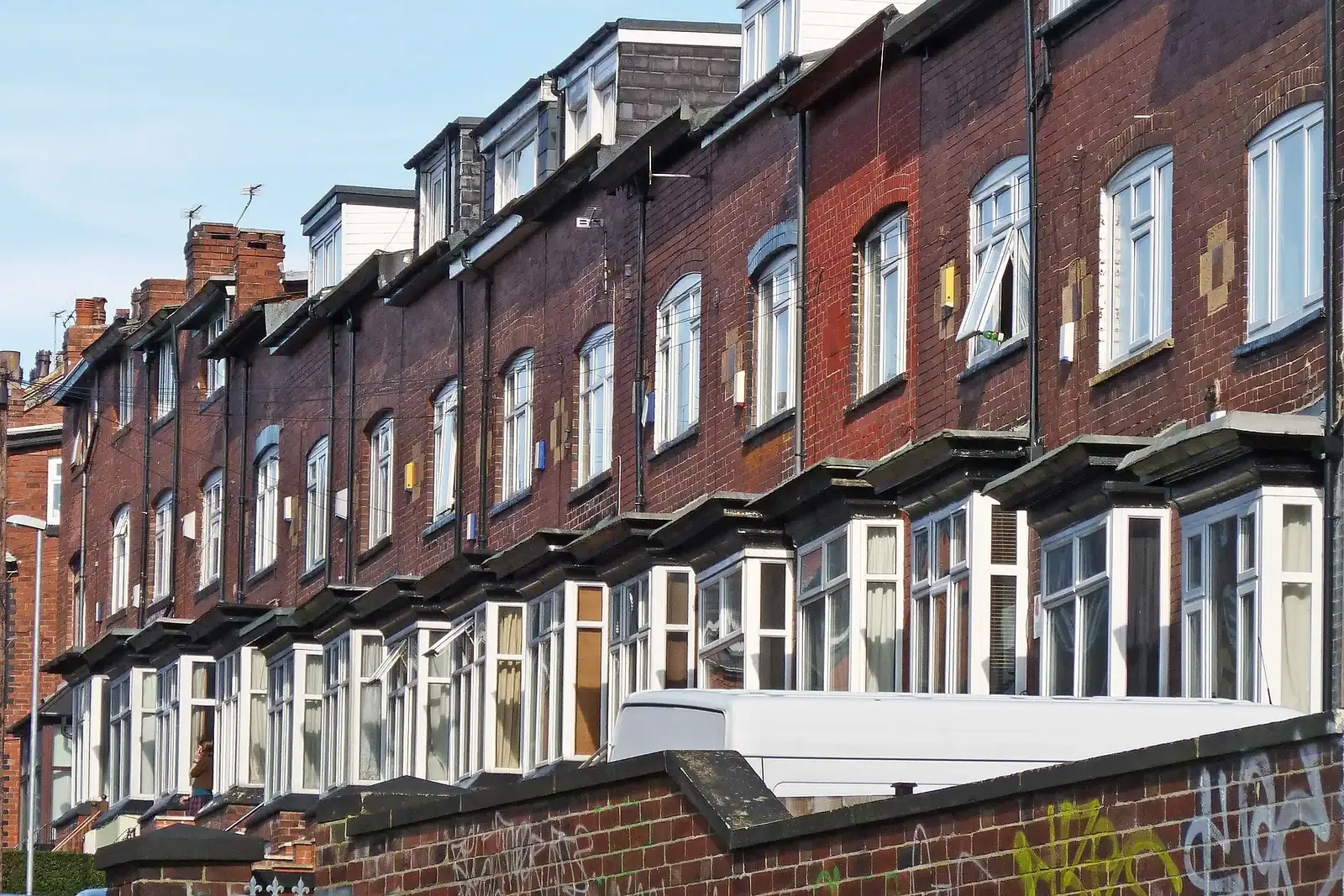
Do I need planning permission for an HMO in London?
Not always. Changing a dwellinghouse to a small house in multiple occupation (Class C4) is permitted development under Class L, unless it would create two or more separate dwellings. An article 4 direction can take that right away, a larger HMO needs an application, and licensing is a separate test with its own thresholds.
Prefer to talk it through?
Class L: the right that makes small HMOs possible
Schedule 2, Part 3, Class L of the General Permitted Development Order 2015 allows a change of use from Class C3 (dwellinghouses) to Class C4 (houses in multiple occupation), and back again. It carries one exclusion that matters here: the right does not apply where the change would create two or more separate dwellings. The Order is on legislation.gov.uk.
So the right covers a single family house that becomes a shared house, and a shared house that returns to a single home. It does not cover splitting a building into self-contained flats, which is a different project. Our guide on converting a house into flats deals with that, and our change of use guide covers the wider picture.
Where article 4 takes the right away
Under article 4(1) of the same Order, the local planning authority, or the Secretary of State, may direct that the permission granted by article 3 does not apply to development described in Schedule 2. Where a direction covers Class L, the change to an HMO needs a planning application like any other.
London councils use these directions widely. Our analysis of the MHCLG Planning Data Platform article 4 direction dataset, bulk snapshot retrieved on 19 October 2026, counts at least 1,161 live entries across the 18 of London's 33 councils that have any. The register is incomplete, so that is a minimum, and an entry might cover something other than HMOs. Check your council's own map and the decision text before you rely on Class L. Our guide to article 4 directions in London explains how to read one.
Our analysis of the MHCLG Planning Data Platform article 4 direction dataset, bulk snapshot retrieved on 19 October 2026, counts at least 1,161 live entries across the 18 of London's 33 councils that have any.
When you need to apply, and how long it takes
You apply if an article 4 direction removes the right, or if the use you want is a larger HMO that sits outside Class C4. Either way the application is not major development, so the council has 8 weeks, beginning with the day after it receives the application, to decide (DMPO 2015, article 34(2)(b)). The guide to how long planning permission takes covers the clock.
Councils judge HMO applications on the quality of the layout, the effect on the area and parking. Layouts that show room sizes, shared facilities and circulation clearly make that judgement quicker, which is the reason the drawings carry so much weight. Our starting fixed fee for HMO conversion layout and planning drawings is £895, from the published price list.
Licensing is a different test from planning
Permission to use a house as an HMO does not licence it. Under article 4 of the Licensing of Houses in Multiple Occupation (Prescribed Description) (England) Order 2018, mandatory licensing covers an HMO occupied by five or more persons living in two or more separate households.
Licence conditions then govern the rooms themselves. Schedule 4 of the Licensing of HMOs (Mandatory Conditions of Licences) (England) Regulations 2018 says a room used for sleeping by one person aged over 10 must be at least 6.51 square metres. A layout that fits planning can still fail that rule, so design to the room sizes from the start.

The drawings an HMO application needs
We prepare the existing and proposed plans for the application or, where Class L applies, the plans you need to confirm the layout works. See our HMO conversion drawings service for what is included, and the HMO conversion cost guide for the build side.
Sources
Every figure on this page, where it comes from and a link to the original.
| Figure | Source | Link |
|---|---|---|
| Class L | GPDO 2015 Sch 2 Pt 3 Class L: change of use from Class C3 (dwellinghouses) to Class C4 (houses in multiple occupation), and back, is permitted development unless it would create two or more separate dwellings (source wording: "Class C4 (houses in multiple occupation)") | www.legislation.gov.uk |
| article 4(1) | GPDO 2015 article 4(1): the local planning authority (or the Secretary of State) may direct that the permission granted by article 3 does not apply to development described in Schedule 2, so a planning application is needed (source wording: "the permission granted by article 3 does not apply to") | www.legislation.gov.uk |
| 1,161 | Our analysis of MHCLG Planning Data Platform conservation-area and article-4-direction datasets (bulk snapshot retrieved 19 Oct 2026) | www.planning.data.gov.uk |
| 8 weeks | DMPO 2015 art 34(2)(b): decision period for an application that is not major development (source wording: "8 weeks beginning with the day immediately following that on which the application is received") | www.legislation.gov.uk |
| five or more | Licensing of Houses in Multiple Occupation (Prescribed Description) (England) Order 2018 art 4: mandatory HMO licensing covers an HMO occupied by five or more persons living in two or more separate households (source wording: "is occupied by five or more persons") | www.legislation.gov.uk |
| 6.51 square metres | Licensing of HMOs (Mandatory Conditions of Licences) (England) Regulations 2018 Sch 4 para 1A(2)(a): a room used as sleeping accommodation by one person aged over 10 must be at least 6.51 square metres (source wording: "not less than 6.51 square metres") | www.legislation.gov.uk |
| £895 | DrawingsDirect starting fixed fee for HMO conversion layout and planning drawings, from the published price list | drawingsdirect.co.uk |
Questions people ask
Do I need planning permission for an HMO?
Do you need planning permission for an HMO in London specifically?
What are HMO permitted development rights?
Do I need a licence as well as planning permission?
Photographs: Tim Green from Bradford (CC BY 2.0).
