Change of Use Drawings in Bromley
Fixed-fee, MCIAT-chartered change of use drawings for Bromley homeowners — London Borough of Bromley validation and local constraints handled from the start.
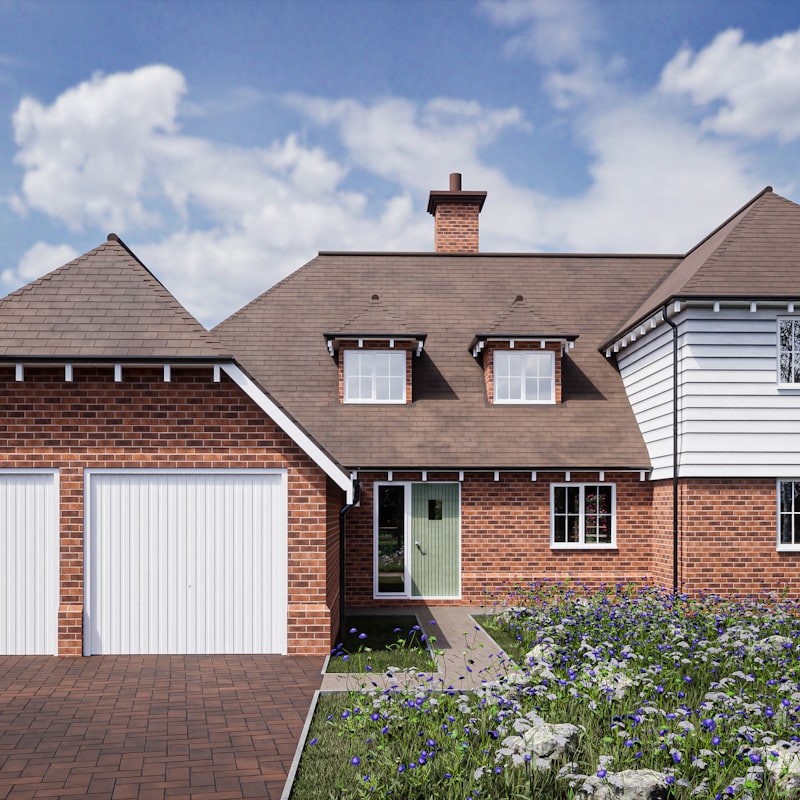
As London's largest borough by area, Bromley offers the generous interwar detached and semi-detached plots that make substantial rear and double-storey extensions genuinely viable. The housing stock runs from suburban semis around Beckenham, Penge and West Wickham to larger detached homes and edge-of-London properties toward Orpington, Hayes and Chislehurst. The right Bromley application is usually about maximising a large plot within policy rather than squeezing a tight terrace, and the room to build is exactly why so many owners here extend rather than move.
Two constraints shape what is achievable. Green-belt designation across the borough's outer edges restricts the scale of additions on properties toward Orpington and Chislehurst, where extensions are assessed against strict limits on disproportionate additions to the original dwelling. Conservation control in Chislehurst, Keston, Hayes, Park Langley and Bromley Town governs materials and design in those areas. Bromley has no borough-wide Article 4 direction affecting typical householder permitted development, so detached homes here often retain fuller rights than inner-London terraces, which we always check first.
We prepare Bromley planning drawings that use the available plot fully while respecting green-belt and conservation constraints, confirming permitted development limits for detached and semi-detached homes before we draw and evidencing green-belt cases carefully where they apply. Because the plots allow larger schemes, we design to the project rather than a standard template, and we agree a fixed fee up front, typically around 30% below an architect's charge for the same council-accepted drawings, with free redraws until Bromley approves. The council determines most householder applications within the statutory eight-week period once validated, so a complete, correctly scaled, validation-first submission is the best way to hold that timescale.
Planning in Bromley: what to know before you apply
Bromley has no borough-wide Article 4 direction affecting typical householder permitted development; the binding constraints are green-belt policy on outer properties and conservation-area control in Chislehurst, Keston and Bromley Town. Detached homes here often retain fuller permitted development rights than inner-London terraces.
Typical Bromley housing stock
Large interwar detached and semi-detached houses with generous plots, plus green-belt and edge-of-London properties toward Orpington and Chislehurst.
Areas we regularly draw for in Bromley
Bromley · Beckenham · Orpington · Chislehurst · Penge · Hayes · West Wickham
What the numbers say about Bromley planning decisions
These are London Borough of Bromley’s own reported figures, published by government rather than estimated by us. They are what we design against — a borough that refuses one householder application in five needs a different drawing package from one that refuses one in twenty.
Proving lawfulness in Bromley
Certificates of lawful development and prior-approval outcomes decided by London Borough of Bromley over eight quarters.
| Certificates of lawful development decided | 1,010 |
|---|---|
| Larger extensions cleared without a full application | 201 |
| Prior approval refused | 23 |
Source: Ministry of Housing, Communities and Local Government (PS1 district planning application statistics). Open Government Licence v3.0 Extracted 2026-08-16.
If London Borough of Bromley refuses: appeal outcomes
Planning appeals against London Borough of Bromley determined by the Planning Inspectorate, 2021–2026. Enforcement notices and withdrawn cases are excluded.
| Appeals determined | 1,108 |
|---|---|
| Allowed | 372 |
| Dismissed | 736 |
| Householder appeals allowedFrom 557 householder appeals. England average 36% | 38% |
Source: Planning Inspectorate appeals casework. Open Government Licence v3.0 Extracted 2026-08-16.
Change of Use Drawings for Bromley homes: the package and the process
A change of use application is decided on what the building is, what it becomes, and what that changes. The drawings show the existing use class layout and the proposed one at the same scale, with a floor area schedule for each so the officer can see exactly what is moving between uses.
The supporting drawings usually matter as much as the plans. Access, parking, servicing arrangements, refuse storage and any external alteration all get drawn, because the objections to a change of use are rarely about the internal layout — they are about what the new use does to the street.
The building's form limits what it can honestly become. A ground-floor unit with its own frontage converts to residential more readily than upper floors reached through a shared entrance, and a deep plan with windows on one elevation only will struggle to give a habitable room adequate light whatever the policy position.
What counts as a material change of use?
Not every change in how a building is used needs planning permission — only a 'material' change, one significant enough to affect the character of the use of the land. Converting a single dwellinghouse into two or more flats is always material. Adding paying lodgers within a single household usually is not, until the household tips over into a small House in Multiple Occupation. We assess whether your proposed change crosses that threshold before recommending a route.
The Use Classes Order: C3, C4, E and sui generis
The Use Classes Order groups uses so planners, and permitted development rules, can treat similar activities consistently.
C3 — Dwellinghouses
The class covering a single household living as a single unit, including up to two people living together as a single household who are not related. Most family homes and self-contained flats fall here.
C4 — Houses in multiple occupation (small)
Covers a shared house or flat occupied by three to six unrelated people sharing basic amenities such as a kitchen or bathroom. Moving from C3 to C4 is a change of use, though it is often permitted development unless your borough has removed that right.
Class E — Commercial, business and service
A wide class combining shops, offices, gyms, cafes and other business uses that can change between each other without planning permission, but changing from Class E to residential use is a material change requiring the prior-approval or full planning route.
Sui generis
Uses that do not fit any class, including large HMOs of seven or more unrelated occupants, betting shops and drinking establishments. A change of use to or from a sui generis use normally needs planning permission.
Do I need full planning permission or can I use prior approval?
Some changes of use are permitted development subject to a prior-approval application rather than full planning permission — the best-known example is Class MA, which allows certain Class E commercial premises to become residential (C3) subject to the council assessing specific matters such as flooding, contamination and noise, without a full application. Other changes, including most conversions of a house into self-contained flats, fall outside any prior-approval route and need full householder or full planning permission. We identify which route applies to your building before drawing anything.
| Route | When it applies | Typical package | Fee from |
|---|---|---|---|
| Prior approval (Class MA) | Class E commercial to residential, meeting the criteria | Prior-approval drawings and statement | £1,200 |
| Full planning permission | Conversion into flats, HMO or use outside prior approval | Planning + building regs | £1,600–£2,400 |
| No application needed | Use falls within an existing permitted class change | Drawings for record purposes only | £450 |

Change of Use Drawings across Bromley
Change of Use Drawings in Bromley — FAQs
How much do change of use drawings cost in London?+
What is the difference between a material change of use and general permitted development?+
How long does a change of use application take to be decided?+
Do I need an architect for a change of use application?+
Will converting my house into flats need building regulations approval too?+
Do I need planning permission for an extension in Bromley?+
Can I build a bigger extension because Bromley plots are larger?+
How does green-belt designation affect my Bromley project?+
How long does Bromley Council take to decide?+
How much do planning drawings cost in Bromley?+
Get your free Bromley planning assessment
Tell us your Bromley address and ambition — we'll confirm feasibility, local constraints and a fixed fee within one working day.