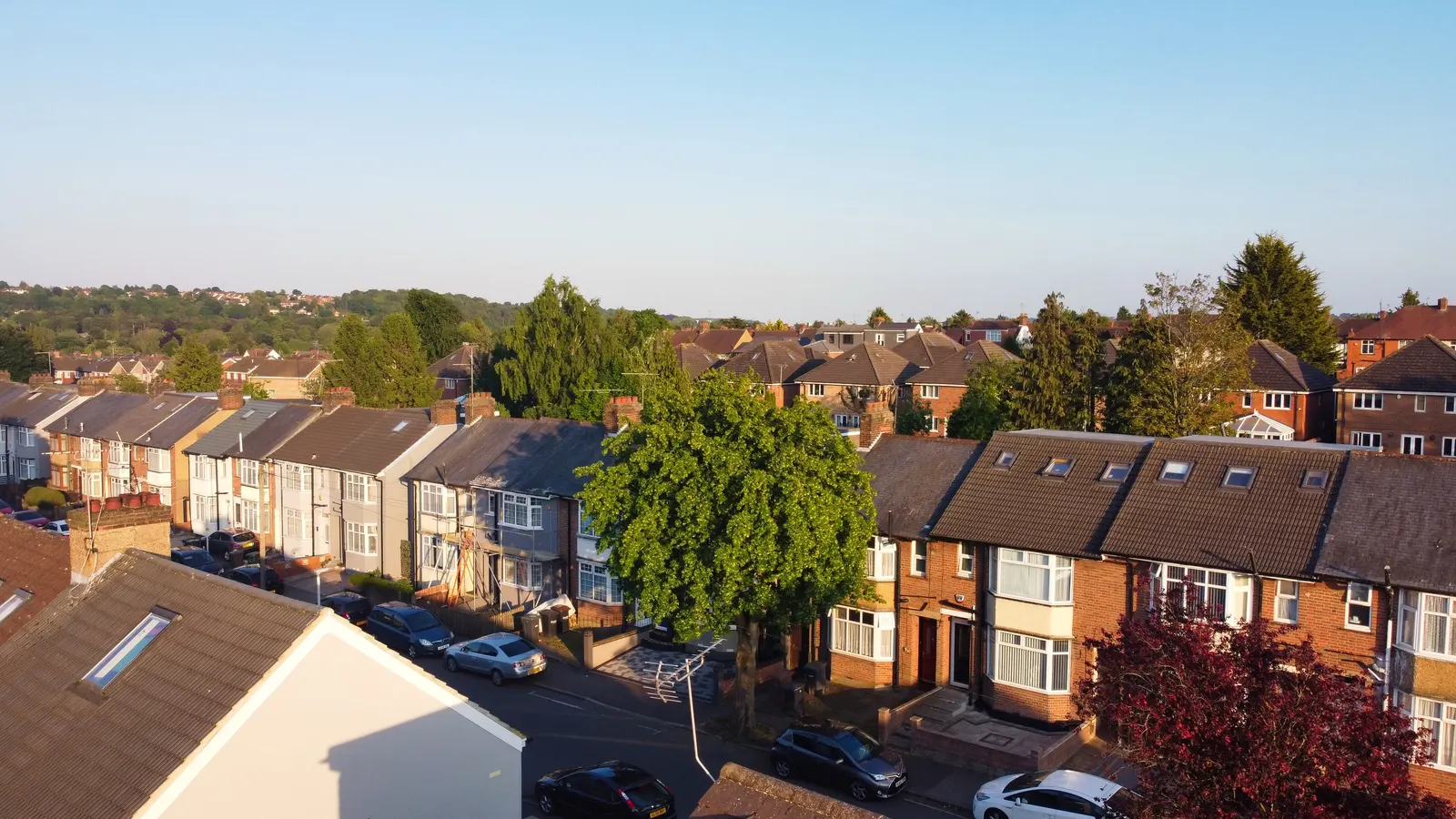
Biodiversity net gain for small London sites
Most planning permissions in England now carry a condition requiring a biodiversity net gain of at least 10%, but many small London projects are exempt, including householder applications and, from 6 August 2026, sites of 0.2 hectares or below. We check your exemption first and tell you before you pay; if it applies, the fixed fee for the metric and gain plan is £725.
Fixed fee from £725 · all prices
Prefer to talk it through?
What the 10% rule is
Biodiversity net gain is a planning condition. Schedule 7A to the Town and Country Planning Act 1990, inserted by Schedule 14 to the Environment Act 2021, says that the relevant percentage is 10% and makes it a condition that the development may not be begun unless a biodiversity gain plan has been approved by the council.
In government guidance the objective is described as at least a 10% increase in biodiversity value compared with the on-site habitat before the development. It is measured with a published metric that scores habitats by their size, type and condition.
Biodiversity Net Gain Reports
from £725
Every price is the full fixed fee you pay. No VAT is charged. Council application fees are paid to the council separately.
What you get
- A check of whether your application is exempt, with the reason, before any fee
- A baseline of the habitats on the site, measured with the small sites metric
- The post-development habitat plan and metric calculation for the 10% gain
- A biodiversity gain plan in the form the council approves before work starts
- Where on-site gain falls short, a note of what off-site units or credits would cover
- Coordination with your drawings and landscaping so the plans and metric agree
- Exemption check
Householder, 25 square metres, or 0.2 hectares: we tell you if you are exempt, before you pay.
- Baseline
Our team records the habitats on the site and their condition.
- Metric
The small sites metric is run for the habitats you will lose, keep and create.
- Gain plan
The 10% gain is set out and drawn into the landscaping, or topped up off site if needed.
- Approval
The biodiversity gain plan goes to the council, which approves it before development begins.
Check whether you are exempt first
Much of what we draw for homeowners falls outside the rule. Government guidance on exempt developments lists these, among others:
Householder applications, which the guidance describes as small projects householders carry out in their own homes. Developments that affect less than 25 square metres of on-site habitat, and less than 5 metres of linear habitat such as hedgerow, inside the red line. And, from 6 August 2026, developments where the site area within the red line boundary is 0.2 hectares or below.
One condition cuts across all of these: the guidance says that if there is an impact on priority habitat on site, the 0.2 hectare and de minimis exemptions do not apply. So the ecology of the plot still matters, even on a small one.
For homes the guidance says this means between 1 and 9 on a site of an area 1 hectare or less dwellings.
If you are exempt, we tell you and you pay nothing
The 0.2 hectare exemption only applies to applications made on or after 6 August 2026, so do not rely on an older web page or an earlier quote. We check the current guidance against your site boundary and your application type, and write the answer down for you.
If your project is exempt, that is the end of it: no report is needed, nothing is charged for this service, and your application can say so. We would rather save you the fee than sell you a document the council will not ask for.
If you are not exempt: the small sites metric
A development that is not major development can use a simpler version of the calculation, the small sites metric. For homes the guidance says this means between 1 and 9 on a site of an area 1 hectare or less dwellings. It cannot be used where priority habitats, protected sites or European protected species are present, in which case the full statutory metric is needed.
The same guidance says that if you qualify to use the small sites metric, you do not need an ecologist for BNG, though a competent person must still complete and check it. Our own team does the baseline survey and scores the habitat conditions, so we can defend them to the council.

What the council wants to see
The council approves the biodiversity gain plan after permission is granted and before any work starts, so it is a pre-commencement matter rather than a validation one. We set out the baseline, the post-development habitats and the metric result so the plan can be approved in one pass, and we keep the landscaping on your drawings consistent with it.
If the plot cannot deliver 10% on site, the plan has to say how the shortfall is made up, with off-site units or statutory credits. We explain those routes in plain terms and price any off-site purchase separately, as it is not part of our fixed fee.
Fee and next step
The fixed fee is £725, the total you pay, and no VAT is charged. It covers the exemption check, the small sites metric, the habitat baseline survey by our team and the written gain plan for a house, a small infill or a conversion with some garden. Off-site units or credits, and any full-metric work for a site that cannot use the small sites version, are quoted separately before they start.
Send your address, the red line area if you have it, and what you want to build. If the exemption applies, we say so by return. A preliminary ecological appraisal is often needed alongside, and we can run both together.
Sources
Every figure on this page, where it comes from and a link to the original.
| Figure | Source | Link |
|---|---|---|
| the relevant percentage is 10% | Environment Act 2021 Sch 14, inserting Sch 7A to the Town and Country Planning Act 1990, para 2(3) (source wording: "The relevant percentage is 10%") | www.legislation.gov.uk |
| may not be begun unless | Environment Act 2021 Sch 14, Sch 7A para 13(2) (source wording: "The condition is that the development may not be begun unless" a biodiversity gain plan is submitted and approved) | www.legislation.gov.uk |
| small projects householders carry out in their own homes | MHCLG/Defra, Biodiversity net gain exempt developments: householder (source wording: "These are small projects householders carry out in their own homes") | www.gov.uk |
| 25 square metres | MHCLG/Defra, Biodiversity net gain exempt developments: de minimis (source wording: "BNG does not apply to developments that impact less than" 25 square metres of on-site habitat, or 5 metres of on-site linear habitat such as hedgerows) | www.gov.uk |
| 0.2 hectares or below | MHCLG/Defra, Biodiversity net gain exempt developments (source wording: "From 6 August 2026, BNG does not apply to developments where the site area within the red line boundary is 0.2 hectares or below") | www.gov.uk |
| impact on priority habitat on site | MHCLG/Defra, Biodiversity net gain exempt developments (source wording: "If there is an impact on priority habitat on-site, the exemptions for the following developments do not apply") | www.gov.uk |
| between 1 and 9 on a site of an area 1 hectare or less | Defra, Calculate biodiversity value with the statutory biodiversity metric: small sites metric (source wording: "the number of dwellings is between 1 and 9 on a site of an area 1 hectare or less") | www.gov.uk |
| you do not need an ecologist for BNG | Defra, Calculate biodiversity value with the statutory biodiversity metric (source wording: "If you qualify to use the SSM, you do not need an ecologist for BNG") | www.gov.uk |
The full guide lives on our sister site
We still prepare this for a fixed £725. The detailed guide to it is on propertyarchitecture.co.uk, part of the same practice.
Questions people ask
Is my house extension exempt from biodiversity net gain?
What is the 0.2 hectare exemption?
What is the de minimis exemption?
Do I need an ecologist for the small sites metric?
When does the gain plan have to be approved?
What if my site cannot reach 10% on its own?
Photographs: Tim Green from Bradford (CC BY 2.0).
