Lawful Development Certificate Drawings in Camden Town NW1
Fixed-fee, MCIAT-chartered lawful development certificate drawings for Camden Town (NW1) homeowners — London Borough of Camden validation and local constraints handled from the start.
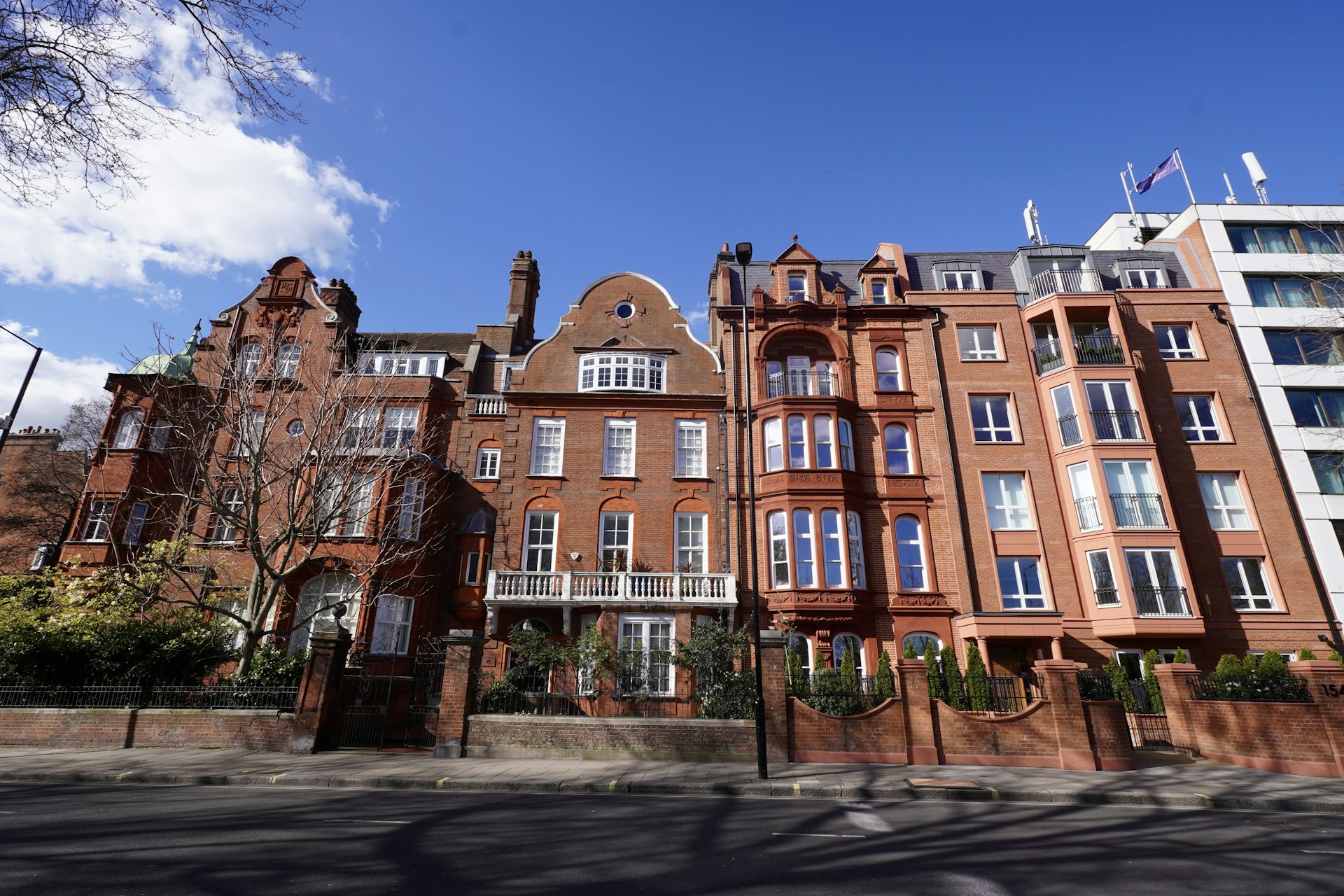
Camden Town (NW1) is one of the most heavily designated districts we work in: three conservation areas — Camden Town, Primrose Hill and Regents Park — cover most of it, and Camden layers multiple Article 4 directions on top. The Georgian and early-Victorian stock around Gloucester Crescent and Regent's Park Road is a large part of why.
Two Article 4 directions shape NW1 projects directly. Camden's Basements direction removes permitted development rights for basement works, so lower-ground schemes need a full application; and within the Central Activities Zone the Class E to C3 direction removes the permitted commercial-to-residential change, which means conversions here go through planning rather than prior approval. A further direction attaches to various properties in the Primrose Hill conservation area. Toward Regent's Park the stuccoed and listed frontages add close control over materials and elevation detail. We establish which conservation area and which Article 4 directions apply to an NW1 address before drawing to Camden's guidance.
Planning in Camden Town (NW1): what to know before you apply
NW1 sits under several Camden Article 4 directions at once. The Basements direction removes permitted development rights for basement works, and inside the Central Activities Zone the Class E to C3 direction removes the permitted commercial-to-residential change — so both basement and conversion projects need full applications rather than prior approval. Three conservation areas (Camden Town, Primrose Hill, Regents Park) cover most of the district, a further direction attaches to various Primrose Hill properties, and the stuccoed and listed frontages toward Regent's Park are closely controlled on materials and detail.
Typical Camden Town housing stock
Georgian and early-Victorian terraces around Camden High Street and Gloucester Crescent, stuccoed villas and terraces toward Primrose Hill and Regent's Park, and canal-side former industrial buildings.
Streets we regularly draw for in Camden Town
Camden High Street · Parkway · Regent's Park Road · Gloucester Crescent
What NW1 is actually built of
Measured from 283 classified residential buildings in NW1, not from a description of the area.
Camden Town NW1 housing mix
Residential building form across the NW1 postcode district, from 283 classified buildings.
| Attached on more than one side | 74% |
|---|---|
| Attached on one side | 22% |
| Detached | 4% |
| Median building footprint | 63 m² |
| Addresses per buildingAbove about 2 means flats and maisonettes dominate | 4.31 |
| Buildings classified | 283 |
Source: Ordnance Survey National Geographic Database (derived statistics). Contains OS data © Crown copyright and database right 2026. Contains Royal Mail data © Royal Mail copyright and database right 2026. Extracted 2026-08-17.
Lawful Development Certificate Drawings for Camden Town (NW1) homes: the package and the process
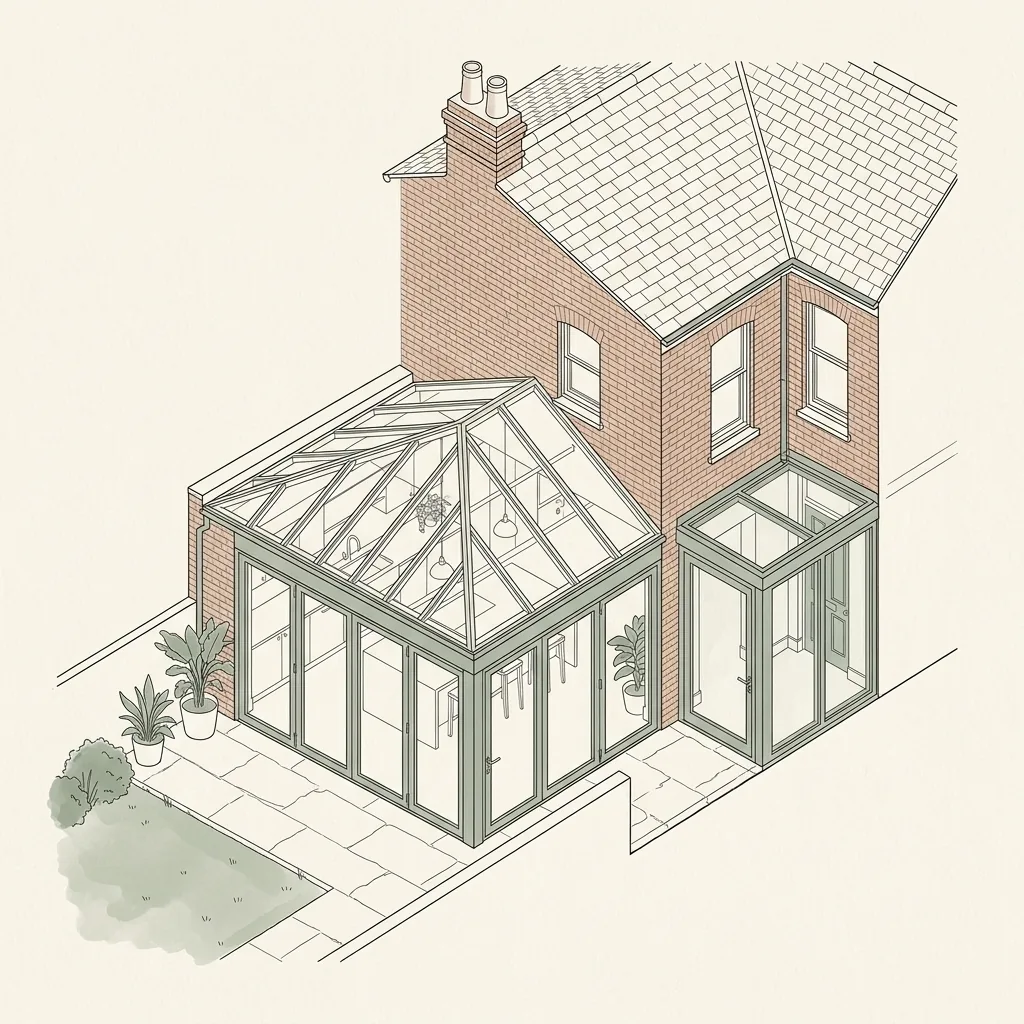
A certificate application is an evidence exercise. There is no design judgement to win: either the proposal falls inside the permitted development rules or it does not, and the drawings have to prove which. Every limiting dimension — depth, height, volume, distance to boundary — is set out and labelled against the rule it satisfies.
That makes accuracy on the existing drawings decisive. The allowances are measured from the original house as first built, so previous extensions have to be shown and discounted. We draw that history explicitly, because an unevidenced claim about the original footprint is the usual reason a certificate is refused.
The allowance depends on the original house, and building form sets it: volume limits differ for terraced homes against semi-detached and detached ones, and depth allowances differ again. Establishing which category the property falls into is the first step of the evidence, not a detail.
What is a Lawful Development Certificate?
A Lawful Development Certificate is issued under the Town and Country Planning Act and confirms, in writing, that a building project or a use of land is lawful and would not have required planning permission — or, for existing situations, that enough time has passed that the council can no longer take enforcement action. It carries the same legal weight as a planning permission for the purposes of proving lawfulness, and is the document solicitors and lenders look for when unauthorised-looking work shows up in a survey or a title check.
Proposed development vs an existing use — the two certificate types
Which certificate you need depends on whether the work is planned or already done.
Certificate of Lawfulness for Proposed Use or Development (LDCP)
Confirms, before you build, that a specific extension, loft conversion, outbuilding or use falls within your permitted development rights, so no planning application is needed. Useful where you want written certainty before committing to a project — for example ahead of a sale, or where a neighbour has raised a query.
Certificate of Lawfulness for Existing Use or Development (LDCE)
Confirms that work already carried out, or a use already established, is lawful — either because it fell within permitted development at the time, or because it has continued unchallenged for the statutory period (generally four years for a building operation or an unauthorised use as a single dwellinghouse, and ten years for most other unauthorised uses). This is the route most often needed at the point of sale, when a survey flags work with no paper trail.
Why choose an LDC over a full planning application?
Where a project genuinely falls within permitted development, an LDC is usually faster and less expensive than a householder planning application, because the council is confirming a fact rather than weighing design, amenity and neighbour impact. It also produces a cleaner record for the future: a full planning permission can carry conditions that still need discharging, while a certificate is a straightforward confirmation of lawfulness with nothing further to satisfy. The trade-off is scope — an LDC only works where the project is genuinely within permitted development or an established use; it cannot be used to seek permission for something that needs planning judgement.
| Factor | Lawful Development Certificate | Full Planning Permission |
|---|---|---|
| What it confirms | That work is lawful and needs no permission | Permission to build, subject to conditions |
| Typical drawing package | From £950 | £1,600–£2,400 |
| Assessment basis | Fact — does it meet permitted development rules | Judgement — design, amenity, neighbour impact |
| Best for | Extensions, lofts and uses within PD rights | Work exceeding PD limits or needing design sign-off |
| Statutory determination period | 8 weeks (typical) | 8 weeks for householder applications |

Lawful Development Certificate Drawings in Camden Town NW1 — FAQs
How much does a Lawful Development Certificate cost?+
How long does an LDC application take to be decided?+
What happens if the council refuses my LDC application?+
Do I need an architect for a Lawful Development Certificate?+
Is an LDC the same as building regulations approval?+
Do I need planning permission for a rear extension in Camden?+
What is a Basement Impact Assessment and will I need one in Camden?+
Can I make changes to a listed building in Camden?+
How long does Camden take to decide an application?+
How much do planning drawings cost in Camden?+
Get your free Camden Town planning assessment
Tell us your Camden Town (NW1) address and ambition — we'll confirm feasibility, local constraints and a fixed fee within one working day.