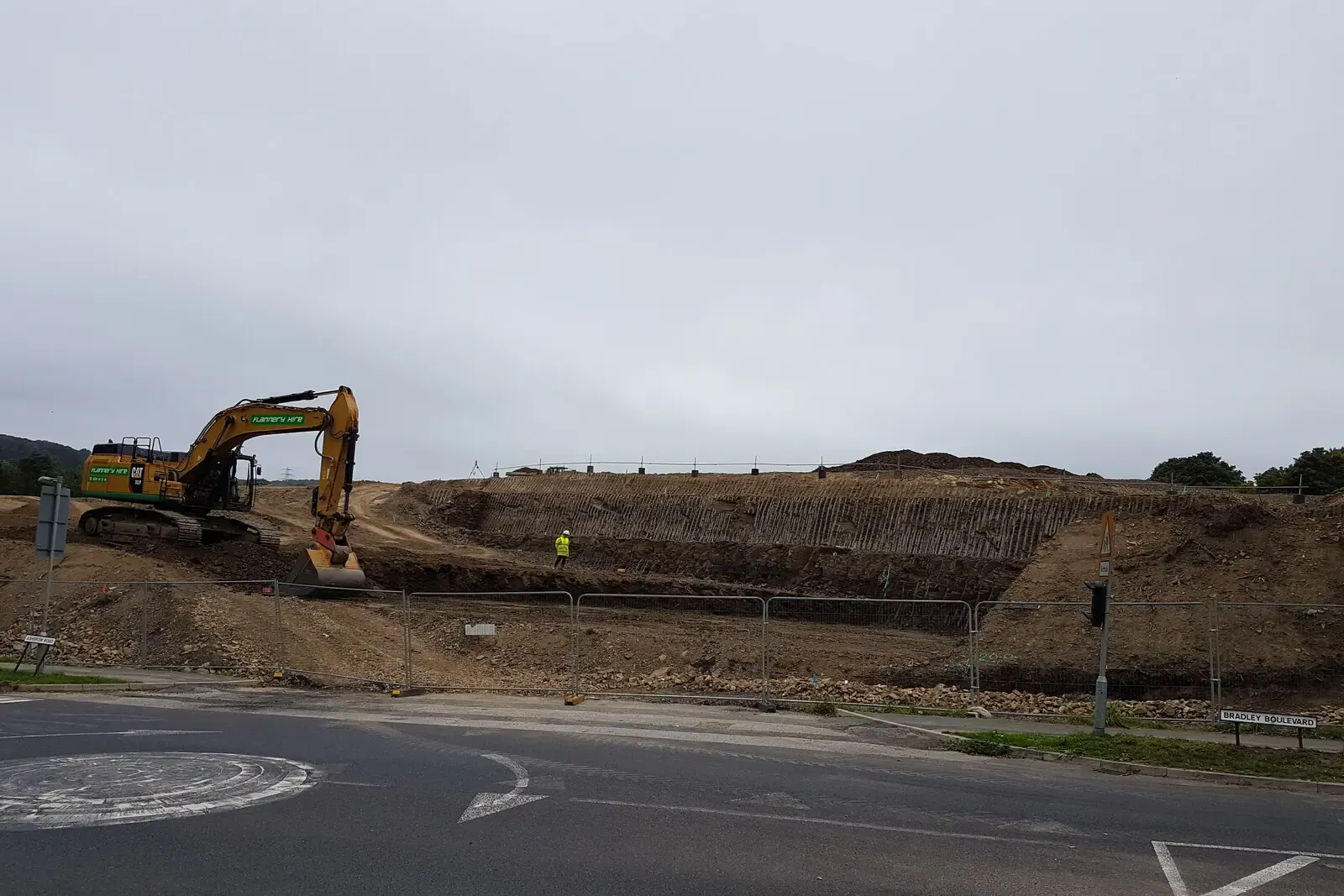
Construction management plans for London planning conditions and obligations
A construction management plan sets out how your build will run without harming neighbours or the street: deliveries, hours, noise, dust, parking and a contact for complaints. If your planning permission or section 106 agreement requires one, we write it for a fixed £575, from your decision notice and drawings.
Fixed fee from £575 · all prices
Prefer to talk it through?
Why you are being asked for one
A construction management plan is not a standard part of every planning application. A council asks for one when it thinks building work on your street needs controlling, and councils commonly do this for basements, new builds and tight sites. The requirement reaches you in one of two ways: a condition on the permission, or a clause in a section 106 agreement. Your decision notice or the agreement will say which.
That matters, because the two work differently. Read your own paperwork first, and send it to us, so the plan answers the words the council actually wrote.
Construction Management Plans
from £575
Every price is the full fixed fee you pay. No VAT is charged. Council application fees are paid to the council separately.
What you get
- A plan written to the exact wording of your condition or obligation
- Working hours, deliveries and site access set out for your street
- Construction traffic, loading and parking arrangements
- Measures for noise, dust and vibration, and a complaints contact
- Site plan showing hoarding, access and where materials are stored
- The plan as a PDF to send to the council for sign-off
- Read the requirement
We take the condition or the section 106 clause, and the council's own template if it has one.
- Study the site
Street width, neighbours, schools, bus routes and where a delivery vehicle can stand.
- Set the rules
Hours of work, delivery windows, noise and dust measures, and who to call.
- Draw the logistics
A site plan with access, hoarding, welfare and storage marked.
- Submit for sign-off
The PDF goes to the council, ready for you to send or for us to submit.
When it is a planning condition
National guidance says a condition must pass six tests: necessary; relevant to planning; relevant to the development to be permitted; enforceable; precise; and reasonable in all other respects. A construction management plan condition is often worded as a pre-commencement condition, meaning "no development shall take place until" the plan is approved.
The same planning guidance on conditions says a pre-commencement condition may not be imposed without the written agreement of the applicant, with limited exceptions. In practice the plan has to be approved before the first day of work, so we write it before your builder starts, not after.

Policy T7 of the London Plan 2021 says Construction Logistics Plans and Delivery and Servicing Plans will be required, developed in accordance with Transport for London guidance.
When it is a section 106 obligation
The guidance on planning obligations says an obligation must be necessary to make the development acceptable in planning terms, directly related to the development, and fairly and reasonably related in scale and kind to it. It also says section 106 agreements should only be used where it is not possible to address unacceptable impacts through a planning condition.
The agreement is a legal document, so we write the plan and you take legal advice on the agreement itself.
What the London Plan adds
Policy T7 of the London Plan 2021 says Construction Logistics Plans and Delivery and Servicing Plans will be required, developed in accordance with Transport for London guidance. Boroughs apply this through their own plans, and some publish a template or a minimum list of contents.
We follow your borough's template where one exists. Where the council has set none, we use a clear structure covering the same ground, and we say what we have used. We do not quote a borough's published rules unless we have the document open in front of us.

What goes in the plan
A plan for a small London site covers who is in charge on site, the hours of work, how deliveries arrive and where they wait, how waste is removed, how dust and noise are limited and how neighbours can reach someone. It includes a site plan marking the hoarding, the access, any parking suspension and the storage area.
For a basement we also describe spoil removal and the vehicle movements it creates, because that is what neighbours notice first. A structural engineer's method for the excavation is separate and is not part of this fee.
Fee, and what we ask you for
The fixed fee is £575, the total you pay, with no VAT charged and no survey visit. Send your decision notice or the section 106 draft, the approved drawings and, if you have one, your builder's name and programme.
Councils may charge their own monitoring or approval fees for a plan, and any bond or contribution in a section 106 agreement is separate from ours. We cannot say what your council charges, and we will point you to the clause so you can ask.

Sources
Every figure on this page, where it comes from and a link to the original.
| Figure | Source | Link |
|---|---|---|
| Construction Logistics Plans | London Plan 2021 Policy T7 G (p436): (source wording: "Construction Logistics Plans and Delivery and Servicing Plans will be required and should be developed in accordance with Transport for London guidance") | www.london.gov.uk |
| reasonable in all other respects | MHCLG Planning Practice Guidance, Use of planning conditions, para 003: the six tests (source wording: "necessary; relevant to planning; relevant to the development to be permitted; enforceable; precise; and reasonable in all other respects") | www.gov.uk |
| no development shall take place until | MHCLG Planning Practice Guidance, Use of planning conditions, para 007: pre-commencement wording (source wording: "no development shall take place until") | www.gov.uk |
| without the written agreement of the applicant | MHCLG Planning Practice Guidance, Use of planning conditions, para 036: (source wording: "without the written agreement of the applicant") with limited exceptions | www.gov.uk |
| it is not possible to address unacceptable impacts through a planning condition | MHCLG Planning Practice Guidance, Planning obligations, para 003: (source wording: "only be used where it is not possible to address unacceptable impacts through a planning condition") | www.gov.uk |
| directly related to the development | MHCLG Planning Practice Guidance, Planning obligations, para 002: (source wording: "necessary to make the development acceptable in planning terms; directly related to the development; and fairly and reasonably related in scale and kind to the development") | www.gov.uk |
The full guide lives on our sister site
We still prepare this for a fixed £575. The detailed guide to it is on drawings4planning.co.uk, part of the same practice.
Questions people ask
Do I always need a construction management plan?
Can the builder write it instead?
Is a construction management plan the same as a construction logistics plan?
Is this the same as discharging a condition?
Does the fee cover a structural method statement for a basement?
Photographs: yorkshirelad (CC BY-SA 2.0).
