Planning and building regulation drawings in Wood Green (N22)
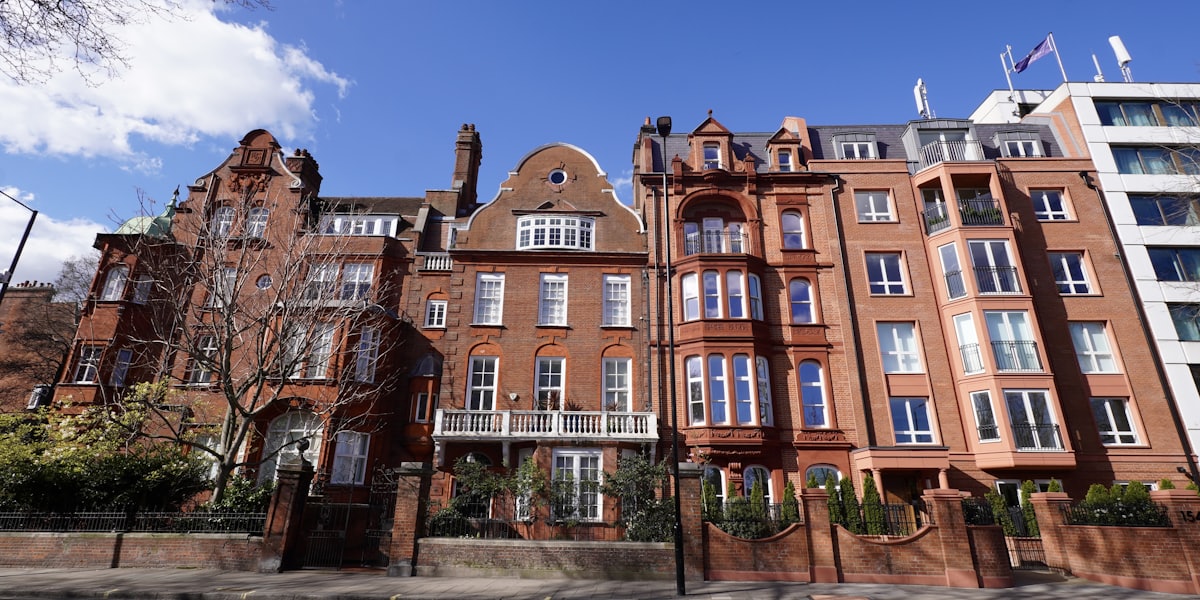
Wood Green grew up fast in the late-Victorian building boom, and you can still read that history street by street. The terraces off Wood Green High Road and around Lordship Lane were built quickly and consistently, which is exactly why the Noel Park estate stands out: it was planned, not thrown together, with cottage-style houses laid out to a single design. That planning is why homeowners there run into a different conversation with the council than someone in a plainer Victorian street. A loft or a rear addition on a Noel Park cottage gets read against the estate's original pattern, not just against next door.
- MCIAT chartered technologists
- London Borough of Haringey granted 91% of 702 householder applications
- Drawings in about 7 days
Move toward Bowes Park or the Common and the picture loosens a little, with the terraced streets carrying their own separate conservation designation. That mix means N22 isn't one planning conversation, it's four or five running at once depending on which side of the postcode you're on. Gladstone Avenue and Westbury Avenue both sit within that stretch of the district. None of it carries a directly removed permitted development right for standard house extensions here, so a lot of ground-floor and loft work can still go through without full planning permission, provided it stays inside the usual size and height limits. What changes the calculation is which of the district's conservation areas your specific address sits in, because that alone brings a design conversation that a plain terrace two streets over doesn't have.
We draw for both situations in N22: the straightforward rear extension on an unlisted Victorian terrace, and the trickier one where a client's cottage sits inside Noel Park and every window and roofline needs justifying against the estate's character.
Planning in Wood Green: what to know before you apply
Haringey's planners look for consistency first. In a street built to one plan, like Noel Park, they'll compare a proposed extension or loft against the pattern the whole estate follows, down to roofline and elevation detail, because the value of a model estate is in that uniformity. Elsewhere in Wood Green, where the housing is more mixed, the bar is usually more relaxed. A conservation area on its own, without an Article 4 direction, doesn't strip a single-storey rear extension of its permitted development right, but a site inside Bowes Park, Trinity Gardens or Wood Green Common does lose the permitted development routes for side extensions, extensions of more than one storey, roof enlargements, external cladding and the larger-home-extension prior-approval scheme, so those need a full planning application regardless of what's allowed a street away. Rear depth is its own separate issue on the older estate plots, where narrower gardens limit how far back you can realistically build regardless of what planning rules allow. We check which conservation area, if any, covers your specific address before we draw anything, because that single fact decides whether you're submitting a full application or working to permitted development limits.
Applications are decided by London Borough of Haringey — its planning pages.
Does your Wood Green project need planning permission?
Wood Green (N22) in numbers
What London Borough of Haringey has decided, and what N22 is built of — the two facts that shape every job here.
Householder planning decisions — London Borough of Haringey
Wood Green (N22) applications are decided by London Borough of Haringey; these are its published householder figures for the last four quarters.
| Householder applications decided2025 Q2 to 2026 Q1 | 702 |
|---|---|
| Granted | 638 |
| Refused | 64 |
| Grantedof 702 decisions · England 90% | 91% |
| Decided within 8 weeksof 421, excluding prior approvals | 92% |
Source: Ministry of Housing, Communities and Local Government (PS2 district planning application statistics). Open Government Licence v3.0 Extracted 2026-09-22.
Permitted development prior approvals — London Borough of Haringey
How the larger-home-extension route has fared with London Borough of Haringey, which decides N22 notifications.
| Larger home extension prior approvals — not required2024 Q2 to 2026 Q1 | 134 |
|---|---|
| Prior approval granted | 17 |
| Prior approval refused | 45 |
| Grantedof 62 determined | 27% |
Source: Ministry of Housing, Communities and Local Government (PS1 district planning application statistics). Open Government Licence v3.0 Extracted 2026-09-22.
Planning appeals — London Borough of Haringey
Refusals in N22 can be appealed to the Planning Inspectorate; this is London Borough of Haringey's householder appeal record.
| Householder appeals determined2021–2026 | 148 |
|---|---|
| Allowed | 55 |
| Allowedof 148 · England 36% | 37% |
Source: Planning Inspectorate appeals casework. Open Government Licence v3.0 Extracted 2026-09-22.
Conservation areas and Article 4 directions — London Borough of Haringey
Register counts for London Borough of Haringey. A count describes what the council has published, never a rank against another council.
| Conservation areas in the register8 dated, 1987–2019 | 33 |
|---|---|
| Article 4 directions in the register | 25 |
| Areas covered by an Article 4 direction | 25 |
Source: MHCLG Planning Data Platform. Open Government Licence v3.0 Extracted 2026-09-22.
What N22 is built of
Residential building form across Wood Green (N22), from 387 classified buildings — the fact that decides party walls, side returns and loft headroom before any policy does.
| Attached on more than one side | 70% |
|---|---|
| Attached on one side | 28% |
| Detached | 3% |
| Median building footprint | 67 m² |
| Addresses per buildingAbove about 2 means flats and maisonettes dominate | 1.69 |
| Buildings classified | 387 |
Source: Ordnance Survey National Geographic Database (derived statistics). Contains OS data © Crown copyright and database right 2026. Contains Royal Mail data © Royal Mail copyright and database right 2026. Extracted 2026-09-22.
- Day 0Measured survey of your Wood Green property — or your existing plans if you have them.
- About 7 daysDrawings issued for your approval. Free redraws until you are happy.
- SubmissionWe validate against London Borough of Haringey’s checklist and submit on your behalf.
- Council: 8-week targetHouseholder applications carry an 8-week statutory target. London Borough of Haringey decided 92% of 421 recent householder applications inside it.
Source: Ministry of Housing, Communities and Local Government (PS2 district planning application statistics). Open Government Licence v3.0 Extracted 2026-09-22.
Streets and neighbourhoods in N22
Wood Green (N22) — FAQs
Do I need planning permission for a rear extension in Wood Green?+
Why does Noel Park get treated differently to the rest of Wood Green?+
Get your free Wood Green planning assessment
Tell us your N22 address and ambition — feasibility, constraints and a fixed fee within one working day.