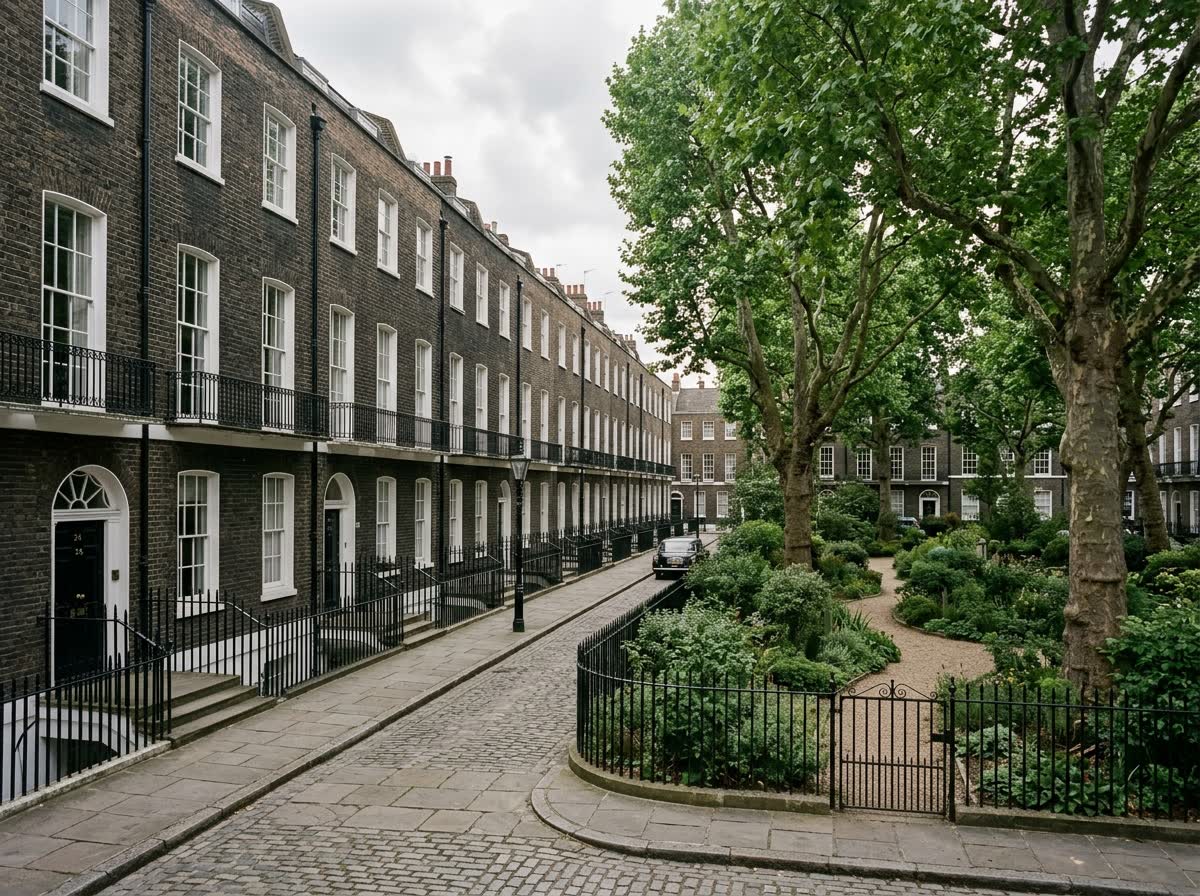
Article 4 Directions in London, Explained (2026)
What an Article 4 direction is, how it removes permitted development in London, how to check if your address is covered, and what it means for your extension or conversion.
Article 4 directions are one of the most misunderstood parts of the London planning system. Homeowners routinely assume a project is permitted development, get part-way into it, and only then discover that their council has quietly removed the very right they were relying on. This guide explains what an Article 4 direction is, how to check whether one covers your address, and what it means in practice for an extension, a loft, or a conversion.
The core idea is simple. Permitted development rights, granted nationally through the General Permitted Development Order, let you carry out defined works without a planning application. An Article 4 direction lets a local council switch specific rights off for a named area where it judges that unrestricted change would harm local character or amenity. The result is a planning map that varies street by street — which is why a national how-to guide can never tell you what you are actually allowed to build in London.
What is an Article 4 direction?
An Article 4 direction is a formal decision by a local planning authority to remove one or more permitted development rights within a defined area. It takes its name from Article 4 of the General Permitted Development Order, the regulation that grants councils this power. Where a direction is in force, the works it names can no longer be carried out under permitted development, so they require an ordinary planning application instead.
Crucially, an Article 4 direction does not ban anything. It simply moves the decision from an automatic national right to a case-by-case judgement by the council. The council must justify the direction on planning grounds — usually protecting the character of a conservation area or the supply of family housing — and there is a formal process to make one, including public consultation and, in many cases, a period before it takes effect. Once in force, it becomes a planning constraint on every property inside its boundary.
How does an Article 4 direction remove permitted development?
It works by naming the specific classes of permitted development that no longer apply inside the area. A direction is rarely a blanket removal of every right; it is targeted at the changes the council is worried about. One direction might remove the right to alter front elevations, windows and boundary walls in a conservation area, while another removes only the right to change a family house into flats or into a house in multiple occupation across a whole borough.
Because directions are targeted, two homes a few streets apart can face completely different rules. A loft dormer might still be permitted development on your road but need permission on the next; a change of use might be automatic in one borough and require a full application in the neighbouring one. This is why the only reliable way to know your position is to check the direction that actually applies to your address, rather than reasoning from the national permitted-development limits alone.
What Article 4 does not change
An Article 4 direction removes a permitted-development right; it does not change the underlying planning merits of a proposal. If your extension was a good, policy-compliant design before the direction, it remains one — you simply now have to demonstrate that through an application rather than relying on an automatic right. The direction also does not affect building regulations, party-wall obligations or any other consent regime, all of which apply regardless. In short, it changes the route to consent, not the destination.
Why councils make them
London boroughs use Article 4 directions for two dominant reasons. The first is protecting the character of conservation areas, by controlling the small cumulative changes — replacement windows, painted brickwork, hardstanding over front gardens, satellite dishes — that individually seem trivial but collectively erode a street's appearance. The second, increasingly common, is housing: many boroughs have made borough-wide directions removing the permitted-development right to convert a family house into a small house in multiple occupation, so that the council can assess the impact of each conversion on the local housing mix and amenity.

How do I check if my address is covered by an Article 4 direction?
Start with your local council, because Article 4 directions are made and held at borough level. Most London boroughs publish an interactive planning-constraints or policies map where you can enter your postcode and see the conservation areas, listed buildings and Article 4 directions that touch your property. The council's planning-policy pages usually list every direction in force, with a map and a schedule of exactly which permitted-development rights each one removes.
If the map is unclear, a written planning enquiry to the council will confirm your position, and the Land Registry local search carried out during a purchase should also reveal any direction. What you cannot do is rely on a generic national permitted-development guide or an online calculator, because those describe the default rights and have no knowledge of the local direction sitting on top of them. When the stakes justify it, the definitive proof is a Lawful Development Certificate, in which the council formally confirms whether a specific proposal is lawful — invaluable evidence for a future sale.
- Search your borough's online planning-constraints or policies map by postcode
- Read the council's planning-policy pages, which list each Article 4 direction and the rights it removes
- Commission or review the Land Registry local search when buying a property
- Submit a written planning enquiry if the mapping is ambiguous
- Apply for a Lawful Development Certificate when you need formal, sale-ready proof
What are common examples of Article 4 directions in London?
The most widespread London example is the borough-wide direction on houses in multiple occupation. Many boroughs have removed the permitted-development right that would otherwise let you convert a single family dwelling into a small shared house without permission, so that every such conversion is assessed for its effect on the neighbourhood, parking and the balance of housing. If you are planning to let a house room by room as a shared home, this is the direction most likely to affect you, and overlooking it is a frequent and costly mistake.
The second large category sits in conservation areas, where directions typically remove rights over the details that define a historic street: replacing or altering windows and doors, painting or rendering brickwork, changing roof coverings, adding porches, and paving over front gardens. A growing number of boroughs also use Article 4 directions to control the change of use of shops, pubs and offices, protecting town-centre character and community facilities. The common thread is that each direction targets a specific pressure the council has identified in that place.
What does an Article 4 direction mean for my project?
In practical terms, it usually means one extra step rather than a dead end. Where you might have proceeded under permitted development — or proved your right with a Lawful Development Certificate — you will instead need a planning application for the works the direction covers. That adds time and design work, because a full application is judged on planning merits and often needs supporting drawings and a statement, but it does not make an otherwise reasonable proposal impossible.
There is a helpful quirk in the fee rules: where an application is required solely because an Article 4 direction has withdrawn the permitted-development right, the council does not charge the usual planning application fee. That does not remove the cost of preparing the drawings and statements, but it does soften the financial impact of the extra step. The right approach is to confirm the direction early, design to the borough's policies from the outset, and treat the application as a case to be argued rather than a box to be ticked — which is exactly where accurate drawings and a clear planning narrative pay for themselves.
| Project | No Article 4 direction | Covered by an Article 4 direction |
|---|---|---|
| House to small HMO | Often permitted development — no application | Right removed — full planning application required |
| Replacement front windows | Often no permission needed | Permission required where the direction covers windows |
| Paving over the front garden | Permitted development within limits | Right removed — planning application required |
| Rear loft dormer | May be permitted development | Permission required if the direction covers roof works |
| Planning application fee | Standard statutory fee applies | No fee where the application is needed only because of the direction |
Related services: Planning Permission, Lawful Development Certificate Drawings, Planning Drawings.
Frequently asked questions
What is an Article 4 direction in simple terms?+
Does an Article 4 direction mean I cannot extend my house?+
How do I find out if my property is in an Article 4 area?+
Why has my council made an Article 4 direction?+
Do I have to pay a planning fee if an Article 4 direction applies?+
Can an Article 4 direction be challenged or removed?+
Is an Article 4 direction the same as a conservation area?+
How does an Article 4 direction affect converting a house into flats or an HMO?+
Should I get a Lawful Development Certificate if I am in an Article 4 area?+
Get a fixed-fee quote for your project
Tell us your London address and project. We'll confirm feasibility and a fixed fee within one working day — with a free planning appraisal.